

Rock Tea White Paper · Rock Bone, Floral Aroma / CH.03
A Map of Yancha Cultivars
Da Hong Pao, Shui Xian, Rougui, famous bushes, qizhong — the cultivar system of Wuyi rock tea is more complex than that of any other tea. Chapter Three of the Rock Tea White Paper draws the map clearly.
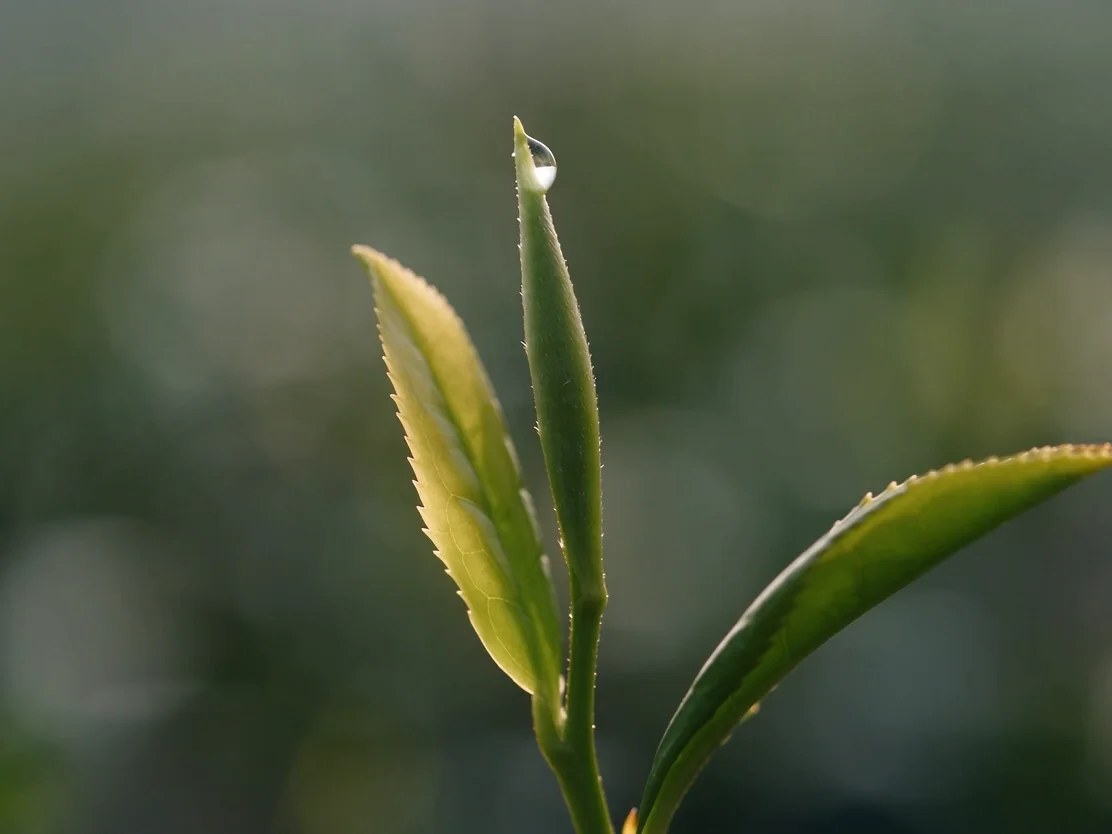
Wuyishan claims more than a thousand cultivars. But among that thousand, only five names actually carry the yancha market: Da Hong Pao, Shui Xian, Rougui, famous bushes, qizhong.
1. The five classes of the national standard
The national standard GB/T 18745 divides Wuyi rock tea by product into five classes: Da Hong Pao, famous bushes (mingcong), Rougui, Shui Xian and qizhong. This is no casual ordering. It is a pyramid of cultivars that runs from legend to everyday, from rarity to abundance.
Da Hong Pao stands at the summit — the mother trees number only six, and commercial Da Hong Pao is a blend. The famous bushes form the second tier: the best of the best among outstanding single plants, each given a name; about seventy are on record, collected in A Register of Wuyi Yancha Mingcong by the senior agronomist Luo Shengcai. Rougui and Shui Xian are the pillars of the pyramid — Rougui made its name by aroma, Shui Xian rules by body, and together they take the great majority of the market's output. Qizhong is the base layer: the native seed-propagated population — the local "caicha" — the oldest genetic foundation of them all.
- Da Hong PaoClass one of the national standard; a legend of a cultivar — six mother trees only, the commercial version a blend.
- MingcongThe best of the best, each named; Luo Shengcai's A Register of Wuyi Yancha Mingcong collects about seventy.
- RouguiClass three; known for an aroma sharp, persistent and distinctly of cassia bark.
- Shui XianClass four; an introduced cultivar, strong in body and woody scent.
- QizhongThe native seed-propagated "caicha"; the root of the cultivar pyramid.
2. Shui Xian: an outsider rooted for a century
Shui Xian is an introduced cultivar — it arrived in Wuyishan around the end of the Qing, and yet took root here more deeply than anything else. Its signature is body: a thick liquor, a settled aroma, and as the trees age, wood and a "grove note" come forward.
Shui Xian is graded by tree age. Unpruned trees over fifty years are called lao cong — old grove; under fifty, gao cong — tall grove; beyond a century, century lao cong. The grove note of lao cong — a steady scent like moss, wood and soil mixed together — is Shui Xian's most precious asset on the tongue. To gather every batch of a single year into one tong is the collecting logic of century lao cong Shui Xian: not because it is rare, but because it cannot be repeated.
- OriginAn introduced cultivar, brought to Wuyishan around the late Qing.
- Lao congUnpruned trees over fifty years; beyond a century, "century lao cong".
- Grove noteA steady scent of moss, wood and soil; the most precious asset of old-grove Shui Xian.
3. Rougui: crowned by aroma
Rougui was first named Yu Gui — "jade cassia" — one of the Wuyi famous bushes, until market applause promoted it into a class of its own. It is unmistakable: a cassia-bark aroma, sharp and persistent, a prickle on entry, a strong returning sweetness. In the vocabulary of yancha tasting, the word "bold" usually belongs to Rougui.
Rougui's aroma, married to the plots, produced the two most famous symbols of the yancha market: "niurou" — beef — meaning Niulankeng Rougui, and "marou" — horse meat — meaning Matouyan Rougui. The first commands heaven-high prices because its plot is scarce; the second yields a little more because its plot is open. But beef or horse alike, the essence is the marriage of the Rougui cultivar with a specific plot — without Rougui's own character, no plot, however good, can produce that sharpness.
The cultivar decides the type of aroma.
The plot decides its temperament.
4. Mingcong: from caicha to stars
A famous bush is made through centuries of selection by the tea farmers of Wuyi: find an outstanding single plant within the native caicha population, propagate it alone by cutting, test it in the cup, choose the best of the best, then grant it a name. Tieluohan, Baijiguan, Shuijingui and Bantianyao all rose this way.
Huiyuan cliff alone has 264 cultivars on record. In the farmers' telling, Wuyishan claims over a thousand. But most famous bushes, with yields too small and aromas too niche, stay between the farmers and a handful of collectors. Fewer than one in ten ever reaches the market.
The farmers name their bushes by shape and habit: a leaf like a melon seed becomes Melon-Seed Gold; a round leaf, Money Leaf; a fragrance that carries, Thousand-Li Fragrance; a gnarled trunk, the Duke's Whip; supple branches, the Weeping Willow. These names carry the instinct of the mountains — more vivid than any marketing script.
- How a mingcong is madeCaicha (native seed population) → single bush (cutting of an outstanding individual) → famous bush (named from the best of the best).
- Huiyuan countHuiyuan cliff alone has 264 named cultivars on record.
- NamingBy shape or trait: Melon-Seed Gold, Money Leaf, Thousand-Li Fragrance, the Duke's Whip, the Weeping Willow, and others.
5. The world of code numbers
Wuyi's cultivar world holds not only ancient names but a full set of breeding codes. From 1977 to 1997, the Tea Research Institute of the Fujian Academy of Agricultural Sciences crossed Tieguanyin as the mother with Huangdan (Huangjingui) as the father, and raised a row of new cultivars:
- 105Huangguanyin (Mingke No.2); provincial approval 1998, national approval 2002.
- 204Jinguanyin (Mingke No.1).
- 220Jinmudan.
- 303Jiulongpao.
- 304Dangui.
- 305Ruixiang.
- 506Huangmeigui.
These codes are the newcomers of Wuyi rock tea — children of famous cultivars, with clear aroma profiles of their own, and ever more welcome in the market. No. 105 (Huangguanyin) lifts a high floral note; No. 204 (Jinguanyin) carries deep fruit; both now hold real weight in yancha blending.
Cultivars covered — the next chapter enters the most legendary name in yancha: Da Hong Pao.
TO TASTE · One cup from the same source
Century lao cong Shui Xian · vintage-batch tong
The wood and the grove note of lao cong are time's coronation of Shui Xian. Every batch of one year, gathered into one tong.
See the vintage batches ↗THE WHITE PAPER OF ROCK TEA
The Rock Tea White Paper · Contents
Twelve chapters and an epilogue, taking yancha apart — plots, cultivars, craft and rock rhyme.