
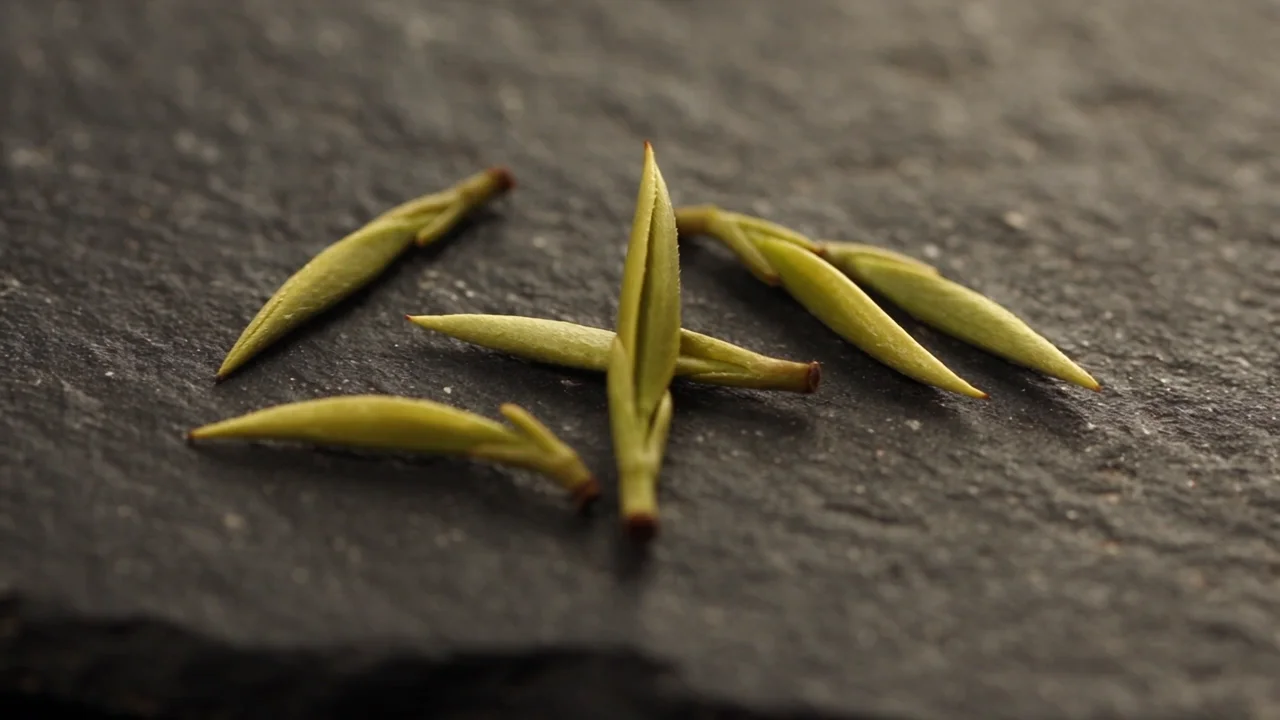

Rock Tea White Paper · Rock Bone, Floral Aroma / CH.07
The Way of the Roast
Light, medium, full, high — fire is yancha's second life. "Store it deep red and the price triples; every household shows off a year of rest." Chapter Seven of the Rock Tea White Paper: the partnership of fire and time.
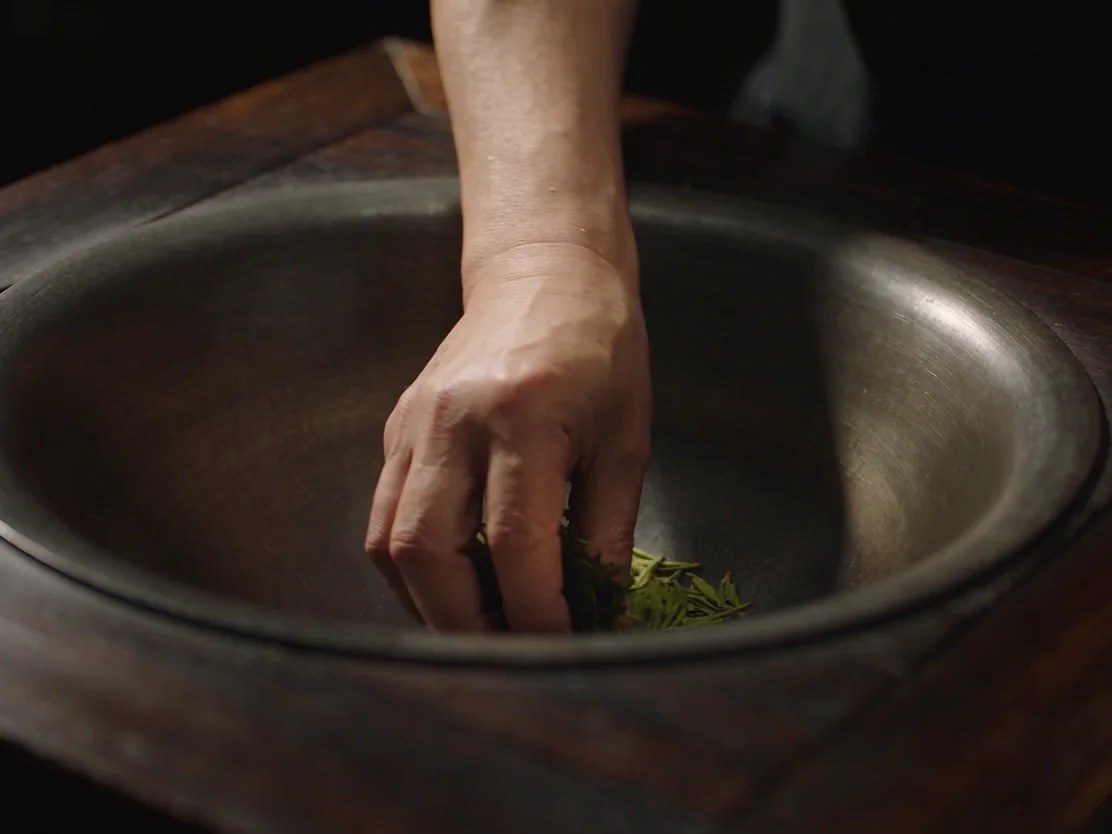
Fire is yancha's second life. From the same batch of fresh leaf, a light roast brings out floral aroma, a full roast brings out fruit, a high roast brings out caramel. Fire is not heating — it is remaking.
1. The four grades of fire
Wuyi rock tea grades its roast into four levels, each with its own character and its own use:
- Light fireAroma high and lifted, mostly floral and fruit; the liquor fresh but thinner, rock rhyme weaker. Made to drink now — not for long keeping.
- Medium fireTea aroma and fire aroma in harmony; the liquor mellow and smooth, rock rhyme distinct. The mainstream style of today's market.
- Full fireA settled fruit aroma, superb aroma in the empty cup, a thick liquor that holds through many steeps; the spent leaf shows raised bubbles — "toad skin". Stores well, made for long keeping.
- High fireAbove full fire, with caramel notes; traditionally used on low-grade tea to bury off-flavours. Rare in today's market.
The four grades are not a ladder of quality — they are four styles. Light fire is a valley in the early morning: clear and fresh. Medium fire is a plot at noon: full and balanced. Full fire is a rock face at dusk: settled and weighty. Which one you choose depends on what you want: freshness — light; balance — medium; keeping — full.
2. Charcoal and electric
Fire has two carriers: charcoal and electricity. On efficiency, electric wins outright — temperature precise, no night vigils, no charcoal to feed. On flavour, charcoal keeps an advantage nothing replaces: charcoal-roasted yancha carries a charcoal-fire aroma that lasts longer and keeps better; electric roasting gives the scent of fire but not of charcoal.
The charcoal aroma comes from the infrared radiation and trace volatile compounds released as the charcoal burns — they seep into the leaf and react with its stored substances. The hot wind of electric roasting is "dry"; the radiation of charcoal is "moist". One sip settles the difference.
- CharcoalCarries a true charcoal-fire aroma; longer-lasting, better for keeping; infrared radiation penetrates the leaf and alters its structure.
- ElectricFire aroma without charcoal aroma; efficient and precise — the tool for everyday tea.
- Traditional judgementThe simmer's heat read by resting the back of the hand against the roasting basket — all by experience.
Roast level is not fire control.
It is how long the tea and the fire talk.
3. The year of rest
In the early Qing, Zhou Lianggong wrote four lines in his Songs of Min Tea: "Though the rain-before tea is fine, it is still too new; keep it from the lips until the fire temper passes. Stored till deep red, the price triples; every household shows off a year of rest."
The four lines crack open the logic of yancha's ageing. Freshly roasted tea carries a raw fire temper — dry and fierce on the tongue. Keep it a year and the temper recedes, the liquor turns mellow, the colour deepens. This is the "year of rest". The "tripled price" tells us that three hundred years ago the people of Wuyishan already knew: time adds value to fire.
The principle is plain. Inside freshly roasted yancha, change continues slowly: the fire temper fades, the aroma settles, the body mellows. No human hand is needed — only a dry, dark, sealed environment. Full-fire tea keeps best; set aside for three to five years, the fire temper burns off entirely, the first notes of age appear, and the flavour often outdoes the new tea.
- Year of restFreshly roasted yancha needs about a year to mature and shed its fire temper; after it, the liquor is softer.
- Zhou LianggongSongs of Min Tea: "Stored till deep red, the price triples; every household shows off a year of rest."
- Collecting logicFull-fire tea keeps well; with rest, the fire temper clears and the first notes of age appear.
4. The language of toad skin
Full-fire tea carries a distinctive mark: once the spent leaf unfurls, its surface shows raised blisters — "toad skin", the trade calls it. It is the physical signature of full fire — high heat over long hours contracts the leaf tissue unevenly and leaves these fine bumps.
Toad skin is not a flaw. It is an identity card. It tells you this tea was roasted all the way to full fire — only enough heat and enough time leave such a trace. Light-fire leaf comes out of the pot smooth; full-fire leaf comes out textured. Reading fire from the spent leaf is a basic skill of the old drinker.
5. Choosing the fire
Roast level is the last gate of yancha's style. Zuoqing sets the foundation; the roast sets the temperament. The same plot, the same batch — light fire makes it a tea of quiet elegance, full fire makes it a tea of depth. Neither is right or wrong; they are directions.
But fire is also the tool most easily abused. Rough old leaf buried under high fire; damp leaf forced into aroma with full fire — there the fire is not shaping style, it is hiding defects. The test is simple: if your throat feels dry and tight after drinking, the roast was likely too heavy or the leaf itself flawed.
Fire covered — the next chapter enters the most romantic corner of yancha: the four famous bushes.
TO TASTE · One cup from the same source
Century lao cong Shui Xian · vintage-batch tong
The age of yancha is a conspiracy of roast and time. One year, one tong, gathered whole.
See the vintage batches ↗THE WHITE PAPER OF ROCK TEA
The Rock Tea White Paper · Contents
Twelve chapters and an epilogue, taking yancha apart — plots, cultivars, craft and rock rhyme.