

Rock Tea White Paper · Rock Bone, Floral Aroma / CH.08
The Four Famous Bushes
Tieluohan, Baijiguan, Shuijingui, Bantianyao — the four famous bushes of Wuyi, each with its own plot, its own legend, its own signature on the tongue. Chapter Eight of the Rock Tea White Paper tells their stories.
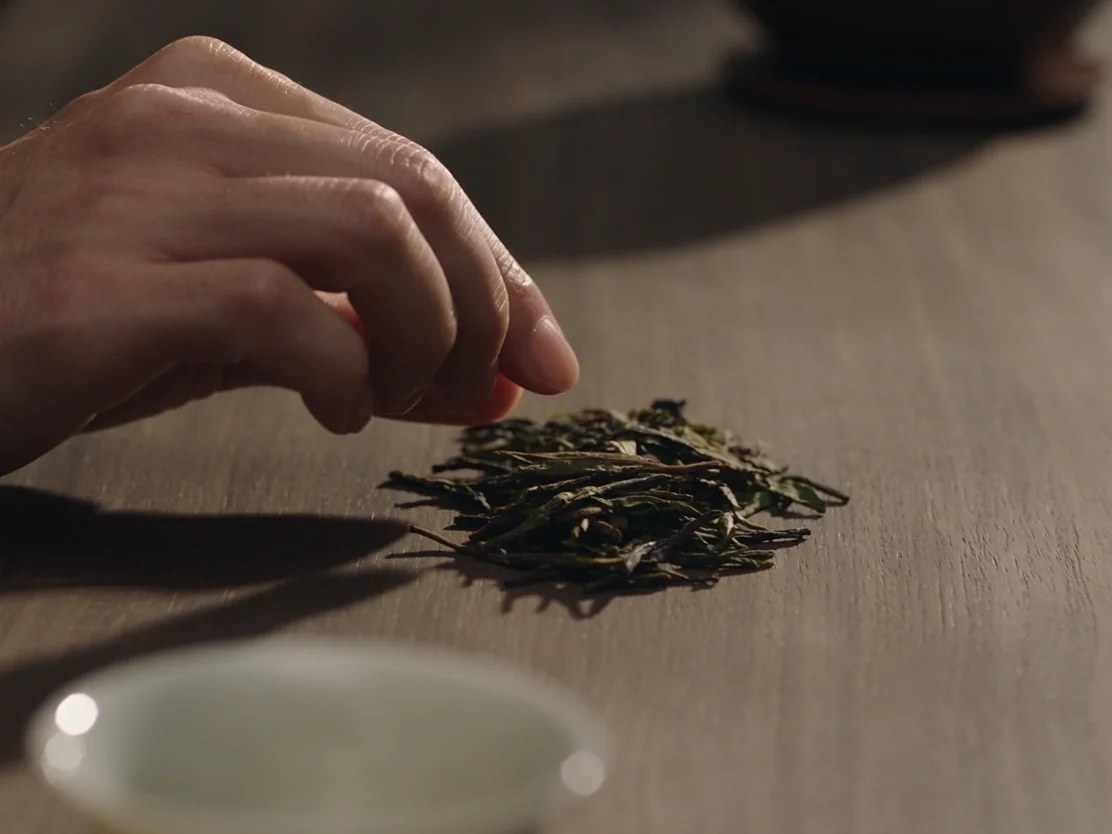
Tieluohan, Baijiguan, Shuijingui, Bantianyao — the four famous bushes. Each has its own plot, its own legend, its own signature on the tongue.
1. Tieluohan: the earliest name
Tieluohan is the first of the four to appear in the written record. Guo Baicang's Min Chan Luyi of the Qing dynasty (1886) notes: "Tieluohan is the name of a Wuyi Song-era tree; its leaves are long." A Song-era tree — the name was already there in the Song dynasty. It is Wuyi's oldest famous bush, and the oldest name in yancha.
Tieluohan is native to Guidong (also called Fengwo Pit) inside Huiyuan cliff; others name Zhuke. A cloned line, shrub type, medium leaf, mid-season, peaking around mid-April. The name itself has a hard, metallic edge — iron for texture, arhat for the Buddhist sense. Drink Tieluohan and you meet a distinct "medicine aroma" and an "iron rhyme": the gravel soil of Huiyuan and the hush of Guidong together.
- RecordQing dynasty, Guo Baicang, Min Chan Luyi (1886): "Tieluohan is the name of a Wuyi Song-era tree; its leaves are long."
- PlotNative to Guidong (also called Fengwo Pit) inside Huiyuan cliff; some say Zhuke.
- CharacterCloned line, shrub type, medium leaf, mid-season; peak harvest around mid-April.
2. Baijiguan: the bud you recognise at a glance
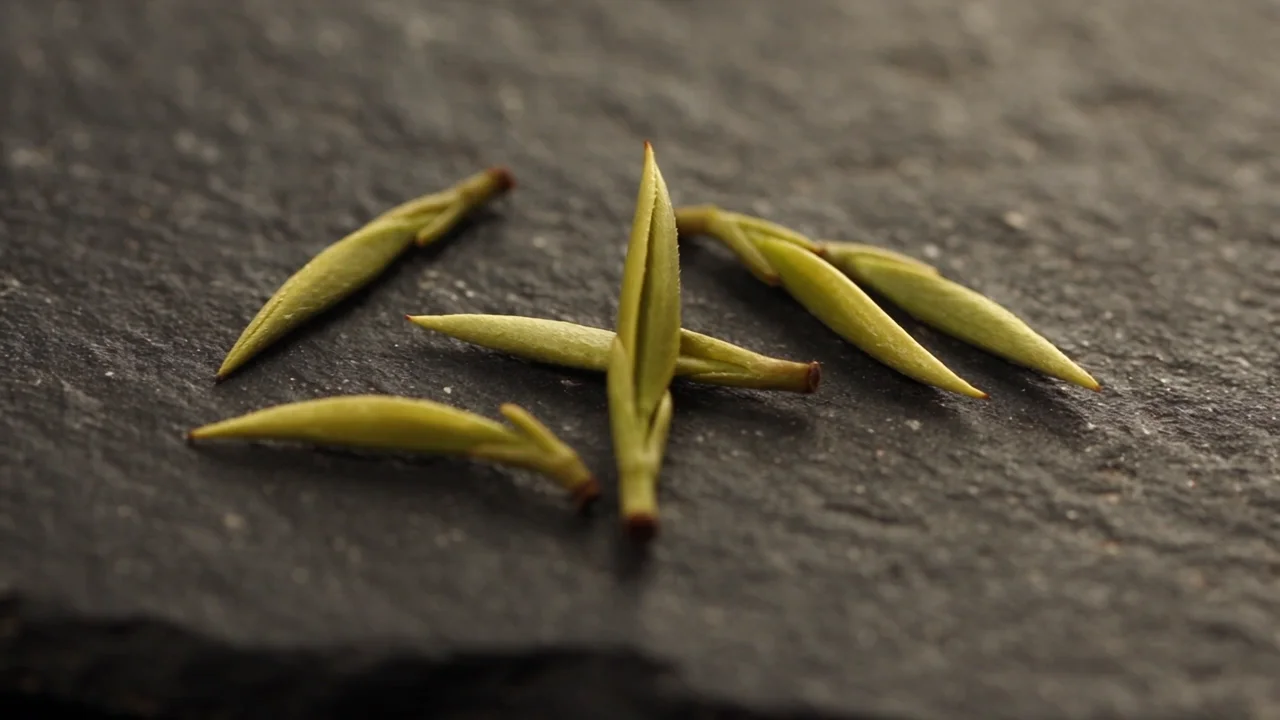
Baijiguan — the white cock's comb — is the easiest of the four to identify: its buds and young leaves are pale yellow, and from a distance they take the colour of a cock's comb. It is native to the White Snake Cave of Zhizhi Nunnery beneath Dawang Peak in Wuyishan; other versions place twin trees of equal fame in the bat cave of Yinping Peak, or in outer Guidong. Its name existed by the Ming dynasty; legend credits its discovery and cultivation to Bai Yuchan (Ge Changgeng), abbot of Zhizhi Nunnery in the Song — a legend, but one that adds to its air of the immortal.
Baijiguan stands out not only in colour but in taste: the dry leaf carries a faint sweet scent of corn, the liquor pale yellow, the flavour fresh and light — the opposite of most yancha's depth. Cloned line, shrub type, medium leaf, late-season. It is the outsider of yancha — it does not win by body; it wins by freshness.
- PlotNative to the White Snake Cave of Zhizhi Nunnery beneath Dawang Peak; other versions cite the bat cave of Yinping Peak, or outer Guidong.
- TraitPale-yellow buds; a faint sweet-corn scent in the dry leaf; unmistakable at a glance.
- HistoryNamed by the Ming at the latest; legend credits the Song abbot Bai Yuchan with its discovery (a legend).
Every name among the four famous bushes
is one of Wuyi's fables.
3. Shuijingui: the golden turtle in the water
Shuijingui — the water golden turtle — is native to the half-height cliffs below Dugezhai Peak in Niulankeng. Its name comes from its look: dense, glistening leaves like a turtle of gold. Another legend says the tree grew first on Dugezhai; one great rain washed it down into Niulankeng, where a second farmer found it — and the two households went to court over it. The magistrate ruled: "heaven made this happen; it belongs to the strength of nature." So it took the name Shuijingui.
Shuijingui is picked around mid-May, mostly two leaves to a bud, sometimes three. Its colour runs green blushed with red, and brewed strong it never turns bitter — its rarest trait: aroma high yet never harsh, body thick yet never bitter. Of the four famous bushes, Shuijingui is the most approachable — its quality arrives without any deep tasting craft.
- PlotNative to the half-height cliffs below Dugezhai Peak, Niulankeng.
- TraitDense, glistening leaves like a golden turtle; colour green blushed with red.
- PickingAround mid-May, two or three leaves; strong brews without bitterness.
4. Bantianyao: a name on the cliff face
Bantianyao was first named Bantianyao — the half-sky sparrowhawk — and grows on the sheer summit cliff of the third peak of Sanhua Peak in Jiulongke. The name comes from a legend: a sparrowhawk carrying a jewel in its beak flew over Sanhua Peak; the jewel fell onto the cliff at mid-height, and from it grew a tea tree. The hawk flew half the sky; the tea stood half the sky high — "half-sky sparrowhawk", later refined into Bantianyao.
Bantianyao is the hardest of the four to reach — it grows on the summit cliff of Sanhua Peak, and picking it means climbing the rock. Luo Shengcai's A Register of Wuyi Yancha Mingcong records it, but the output is so small that genuine tea is almost never seen on the market. Its meaning is not in drinking but in existing — it reminds us where the limit of yancha lies: on the face of the cliff.
- PlotThe sheer summit cliff of the third peak of Sanhua Peak, Jiulongke.
- Original nameBantianyao, the half-sky sparrowhawk, from the legend of a hawk that dropped its jewel on the mid-height cliff.
- RecordListed in Luo Shengcai's A Register of Wuyi Yancha Mingcong.
5. What the famous bushes are worth
The value of the four famous bushes is not that they taste better than Rougui or Shui Xian. It is that they prove the diversity of Wuyi's cultivars. Rougui and Shui Xian are the volume heroes of yancha; the four famous bushes are its cultural specimens — living fossils of several centuries of selection.
Today all four yield little and cost much, and fakes are hard to rule out. If you meet an inexpensive "four famous bushes" on the market, it is most likely a blend or an impostor. A true famous bush is niche, precious, and met only when the meeting is owed.
Famous bushes covered — the next chapter turns practical: how to taste yancha.
TO TASTE · One cup from the same source
The Mulan Archive
From plot to famous bush, traceable and retellable — the value of a famous bush is a provenance written clearly.
Enter the Mulan Archive ↗THE WHITE PAPER OF ROCK TEA
The Rock Tea White Paper · Contents
Twelve chapters and an epilogue, taking yancha apart — plots, cultivars, craft and rock rhyme.