
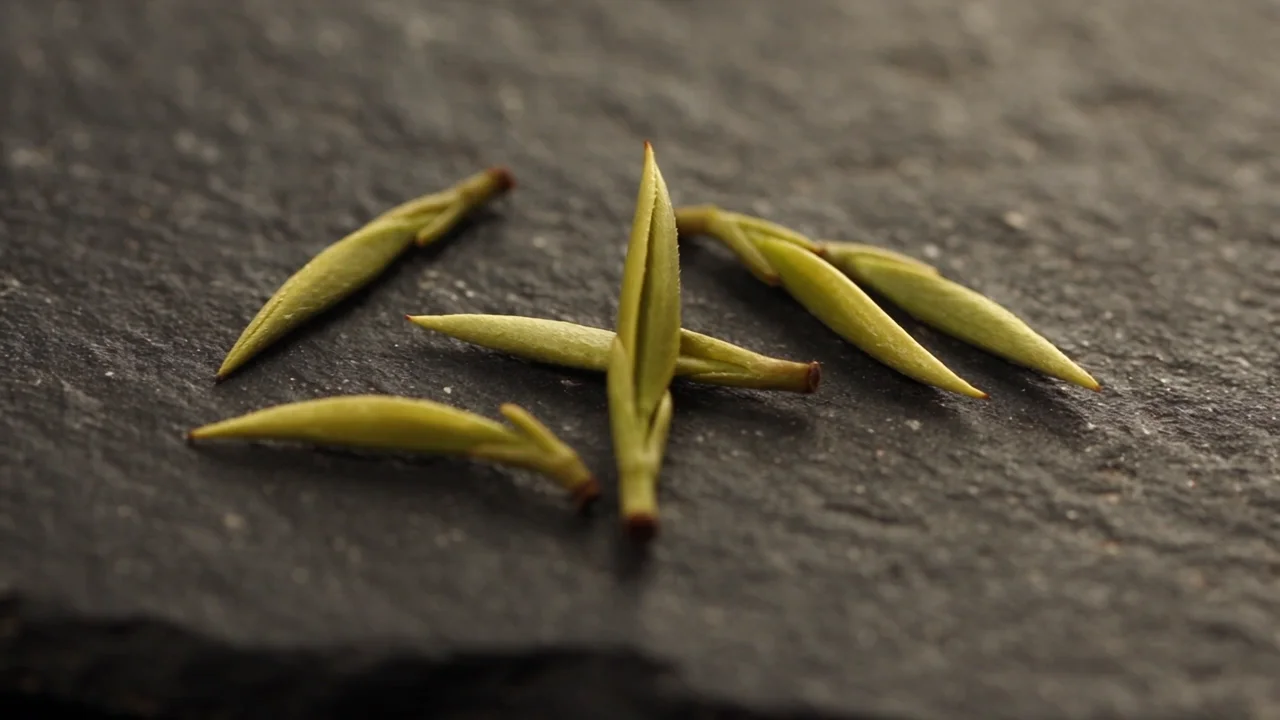

Rock Tea White Paper · Rock Bone, Floral Aroma / CH.05
The Craft of Yancha
Watching the leaf to make the leaf, rocking and oxidation, fixing and rolling, charcoal roasting and the slow simmer — the craft of Wuyi rock tea is the most complex in all oolong. Chapter Five of the Rock Tea White Paper: how one cup of yancha is made.
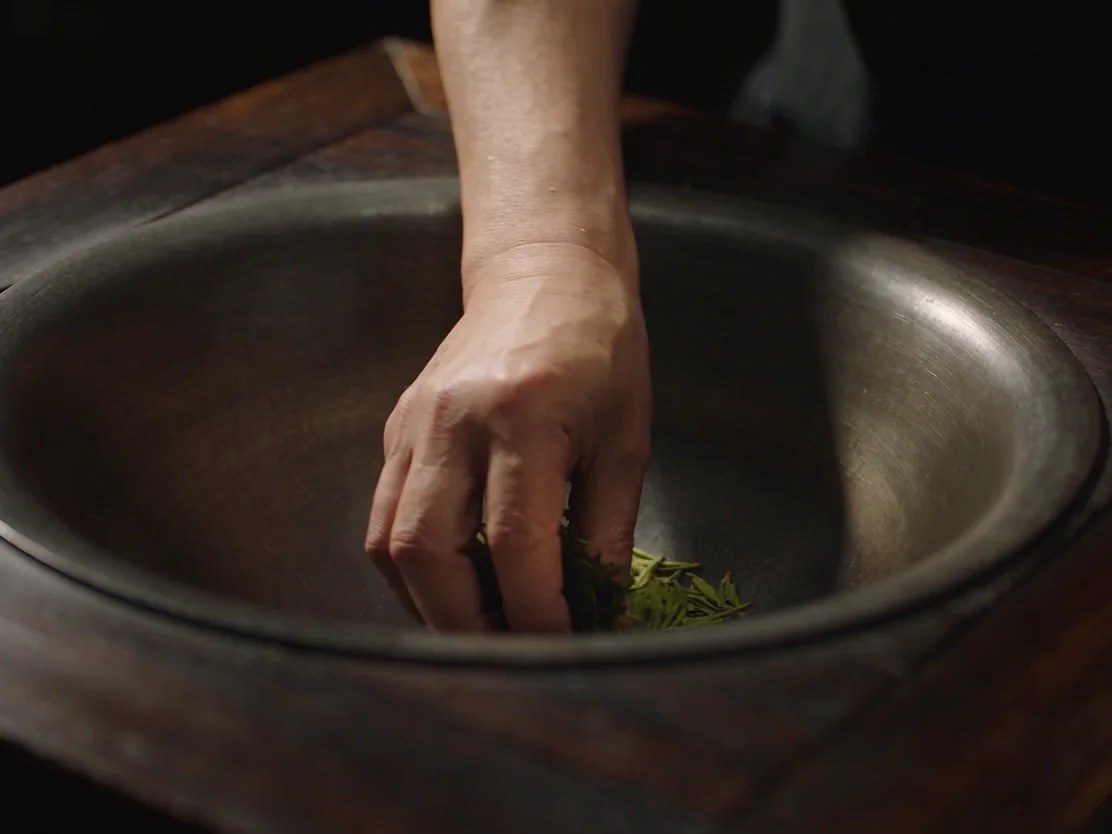
The craft of Wuyi rock tea was the first tea craft entered on the national intangible cultural heritage register. One cup of yancha passes through more than ten steps, across several months, before it comes into being.
1. The first tea craft on the heritage register
In 2006, the craft of making Wuyi rock tea (Da Hong Pao) entered the first batch of the national intangible cultural heritage register — the first tea craft so listed. It was not precious because it was listed; it was so precious the nation had to remember it.
The heart of the craft fits in a folk rhyme: "One pick, two spread to wither; three rock, four rest; five fry, six roll; seven bake, eight strip the stems; nine roast again, ten sift." Ten lines, ten steps, from picking to finished tea — not one of them spared.
- HeritageEntered on the first batch of the national intangible cultural heritage register in 2006 — the first tea craft listed.
- StandardThe local standard DB35/T 2157-2023, "Intangible Cultural Heritage — The Traditional Craft of Wuyi Rock Tea", has been issued and is in force.
- StepsPicking, withering, zuoqing, pan-firing, rolling, re-frying and re-rolling, first roast, winnowing, airing on the rope, sorting, second roast (the simmer) and more — over ten in all.
2. Zuoqing: the watershed of quality
Zuoqing is the core of yancha craft, and what sets oolong apart from green tea and black tea at the root. The process alternates between rocking the leaf and resting it — when rocked, the bruised leaf edges rub against the drum and oxidise red; when resting, water redistributes through the veins and the aroma compounds transform.
Zuoqing ends at "green leaf, red rim" — the leaf edges oxidised red by bruising, roughly three parts in ten, while the centre stays yellow-green, the other seven. The trade calls it "three red, seven green". No instrument measures the ratio; it lives in the master's eyes and hands. Rock too hard and the rim runs too deep, the liquor turns bitter and rough; rock too lightly and the rim falls short, the aroma never opens.
The highest reaches of zuoqing are "make the leaf by the leaf, make the leaf by the sky". The same batch of fresh leaf rocks differently on a clear day and a wet one; the pressure differs morning from afternoon; even within one batch, leaf spread at the centre of the bamboo tray and at the rim takes a different degree of zuoqing. This is experience talking to experience — it will not standardise.
- CoreRocking and rest alternate until the leaf edges bruise red — "green leaf, red rim" (three red, seven green).
- PrincipleMake the leaf by the leaf, make the leaf by the sky — the same fresh leaf differs sharply with temperature and humidity.
- EndpointLeaf edges bright vermilion, centre pale yellow-green or clear green — then, and only then, pan-firing.
Zuoqing has no manual.
It is handed down in the hands.
3. Charcoal roasting: the soul-fire of yancha
After zuoqing, the leaf goes to the charcoal. Charcoal roasting is yancha's soul — without charcoal fire there is no "rock bone". The Qing critic Liang Zhangju wrote that "the roasting of Wuyi is first under heaven", and this is the step he meant.
Traditional charcoal roasting passes through three fires: the first roast, the second roast, and the simmer. The first roast drives off water and fixes the shape; the second sets the aroma and adjusts the structure; the simmer is a slow roast on a low fire — low temperature, long hours, letting the warmth of the fire seep gradually into the body of the leaf. This simmer is the step unique to yancha. Its purpose is not to dry but to finish — to let the tea complete its last transformation at low heat.
The difficulty is control. Liu Guoying, a national-level heritage bearer, says only the charcoal simmer brings out the unique flavour of Wuyi rock tea — lively, sweet, clear, fragrant. Another heritage master, Liu Baoshun, notes that tender high-grade leaf cannot stand strong fire: the simmer should run low and short, the leaf spread thin, to keep the floral aroma. When ravine tea goes over the fire, the master often keeps vigil through the night, reading temperature and humidity by feel, tasting the cup about every half hour.
- Three firesFirst roast, second roast, simmer; the simmer is a slow, low roast — the step unique to yancha.
- JudgementTraditionally the back of the hand, rested lightly against the outside of the roasting basket, reads the heat — all by experience.
- DurationRavine tea demands overnight vigils at the fire, tasting about every half hour.
4. Charcoal and electric
Modern production adds electric roasting — more efficient, more precise in temperature. But it differs from charcoal in kind, not only degree: charcoal-roasted yancha carries a charcoal-fire aroma that lasts longer and keeps better; electric roasting gives the scent of fire but not of charcoal. The infrared radiation of burning charcoal penetrates deep into the leaf and alters its structure — a physical difference no electric oven replaces.
None of this makes electric roasting bad. The two are different tools. Everyday drinking tea runs on electricity — efficient, low cost; tea for collecting and transforming still wants charcoal. Tools serve purpose — but different tools leave different signatures in the cup.
5. Craft as a stance
More than ten steps, and every one of them insists on slowness. From picking in spring to release in autumn, one cup of yancha crosses months of time. In an age that worships speed, the craft of yancha stands like a stubborn gesture — reminding you that some things will not be hurried.
Craft understood — the next chapter takes up the ultimate concept of yancha tasting: rock rhyme.
TO TASTE · One cup from the same source
Mulan objects · Gaiwan and pot
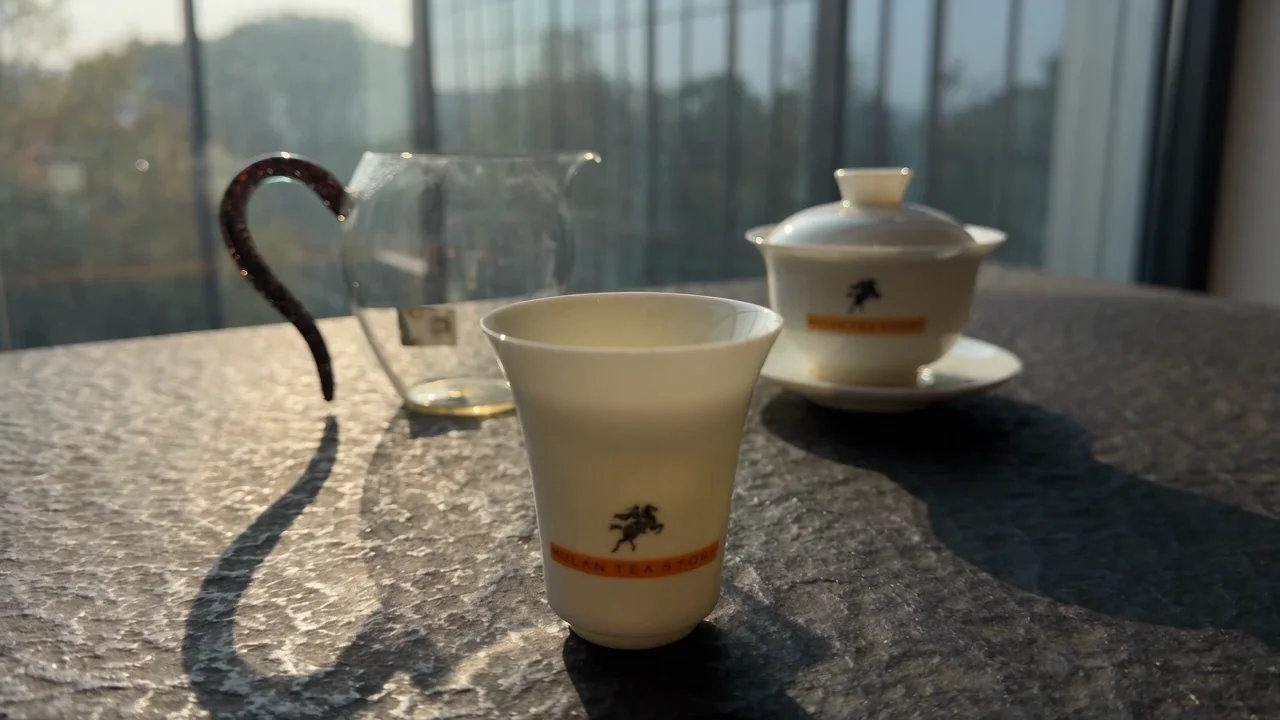
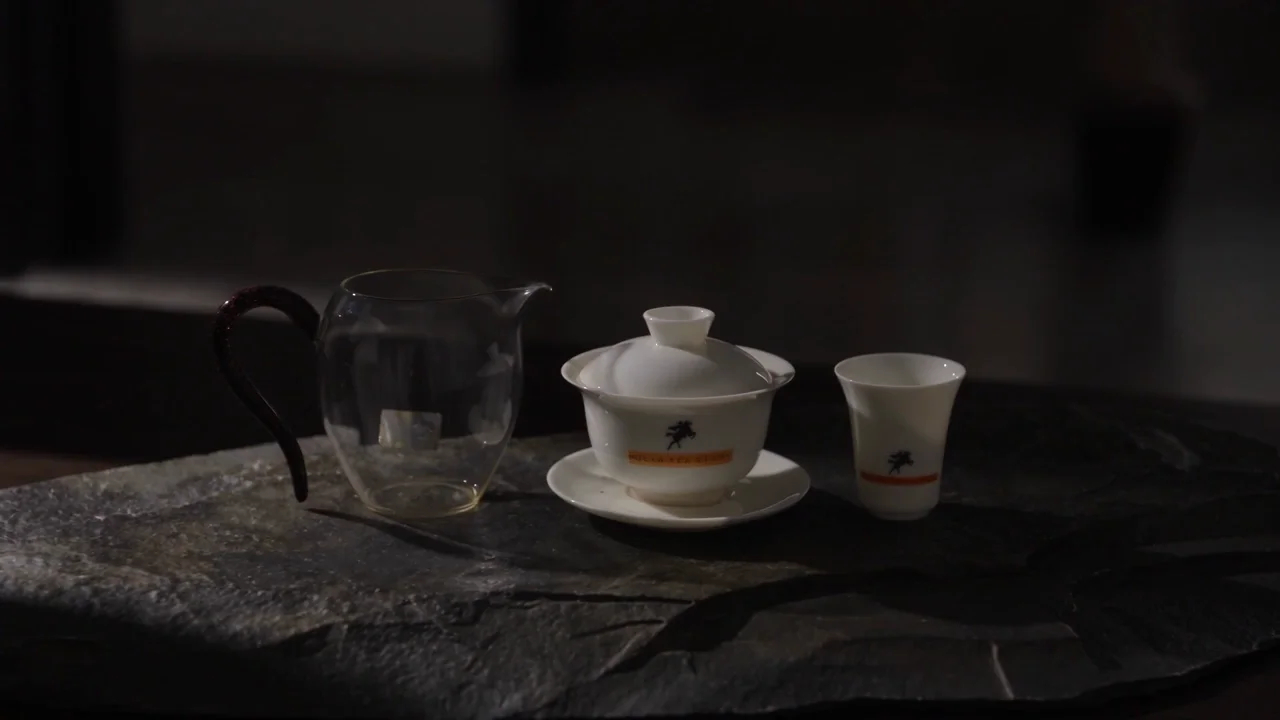
A good cup of yancha begins with the right vessel. Mulan objects, made for yancha.
See Mulan objects ↗THE WHITE PAPER OF ROCK TEA
The Rock Tea White Paper · Contents
Twelve chapters and an epilogue, taking yancha apart — plots, cultivars, craft and rock rhyme.