

Rock Tea White Paper · Rock Bone, Floral Aroma / CH.09
Tasting Yancha
Toad skin, green leaf with a red rim, dragonfly head — the vocabulary of yancha tasting is the distilled experience of old drinkers. Chapter Nine of the Rock Tea White Paper: how to read the dry leaf, the aroma, the colour, the taste and the spent leaf.
Tasting yancha follows a method handed down three hundred years. It is called gongfu tea — and gongfu here means not kung fu, but time and patience.
1. Yuan Mei's record
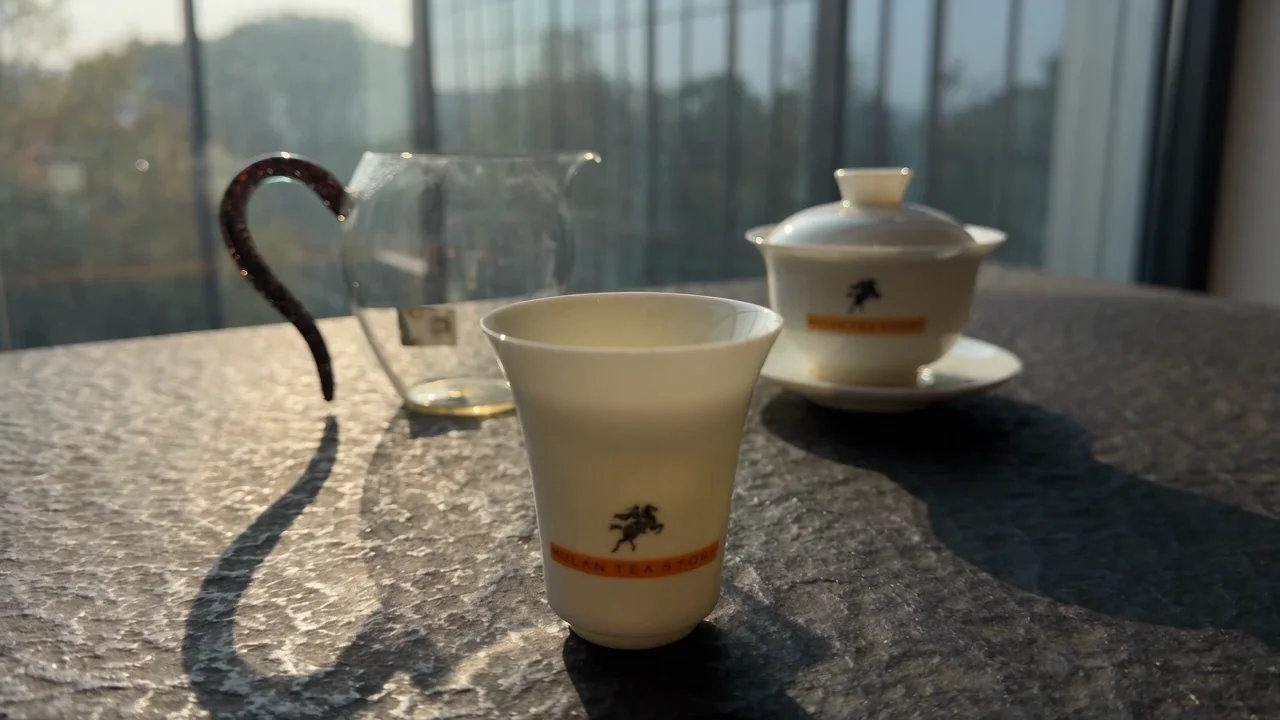
The earliest detailed account of tasting yancha comes from Yuan Mei of the Qing dynasty. In 1786, in the tea and wine chapter of Recipes from the Garden of Contentment, he wrote: "The cup is small as a walnut, the pot small as a citron; each pour is barely an ounce. You cannot bear to swallow at once — first smell the aroma, then try the taste, chewing slowly, letting it travel through you."
Inside those lines lies the whole code of gongfu tea: small cup, small pot, little water, slow tasting. A large cup gulped down only quenches thirst; a small cup sipped slowly takes time. Yuan Mei said he "could not bear to swallow at once" — with good tea, the aroma is still unfolding in your mouth, and you hesitate to end it.
- Yuan MeiRecipes from the Garden of Contentment, tea and wine chapter (1786): "The cup is small as a walnut, the pot small as a citron… first smell the aroma, then try the taste, chewing slowly."
- Gongfu teaScholars generally hold that the gongfu tea ceremony originated at Wuyishan, then spread to southern Fujian, the Chaozhou-Shantou coast and Taiwan.
- The old saying"The pot must be Mengchen, the tea must be Wuyi" — the vessel and the leaf of gongfu tea at their classic match.
2. Dry leaf: dragonfly head and toad skin
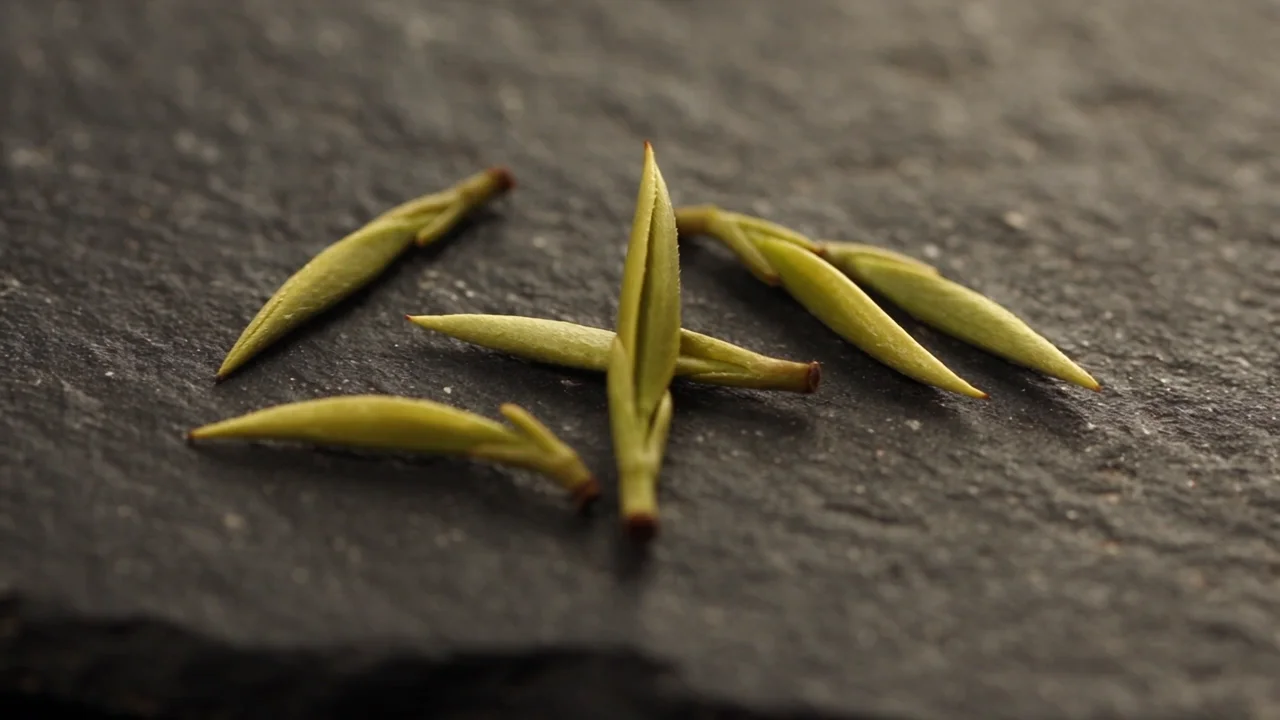
Tasting begins with the dry leaf. Good yancha comes in plump, tight, twisted strips — the "dragonfly head", curled like the head of a dragonfly, compact and strong. The back of the leaf carries frog-skin sand grain — "toad skin" — the texture left as the leaf tissue contracts unevenly after roasting.
True zhengyan dry leaf is tight in the dragonfly-head shape, sandy green, oily, with a gem-like sheen. If the strips are loose, the colour dull grey, then either the leaf was coarse, the roast mishandled, or the plot was never what it claimed.
- Dragonfly headStrips plump, tight and even, with a twisted form.
- Toad skinFrog-skin sand grain on the back of the leaf — the natural texture after roasting.
- ColourSandy green, oily, with a gem-like sheen; dull grey casts doubt on craft or leaf.
The dry leaf is yancha's résumé.
The spent leaf is its medical report.
3. Colour, and the empty-cup aroma
The best yancha liquor is orange-yellow and clear. Light-fire tea leans pale orange, bright through and through; full-fire tea leans deep orange, dense as honey. A cloudy liquor is the signal of a flawed craft — either zuoqing carried too far into over-oxidation, or rolling too light, leaving loose strips and broken dust in the cup.
The empty-cup aroma is the most underrated metric in yancha tasting. A good tea, once the cup is drained, keeps its scent in the empty vessel — floral, fruit, honey, even caramel, still releasing from the porcelain. Full-fire yancha is especially fine here. The longer the empty-cup aroma lasts, the more volatile the aroma compounds, the richer the tea's inner substance.
- ColourOrange-yellow, clear and bright; full fire and aged tea lean deep orange. Cloudiness marks a flaw in craft.
- Empty-cup aromaA scent that lingers in the drained cup — best in full-fire tea, the mark of rich inner substance.
- Spent leafWell-made zuoqing shows leaf edges bright vermilion, centre pale yellow-green or clear green — "green leaf, red rim".
4. The gongfu method
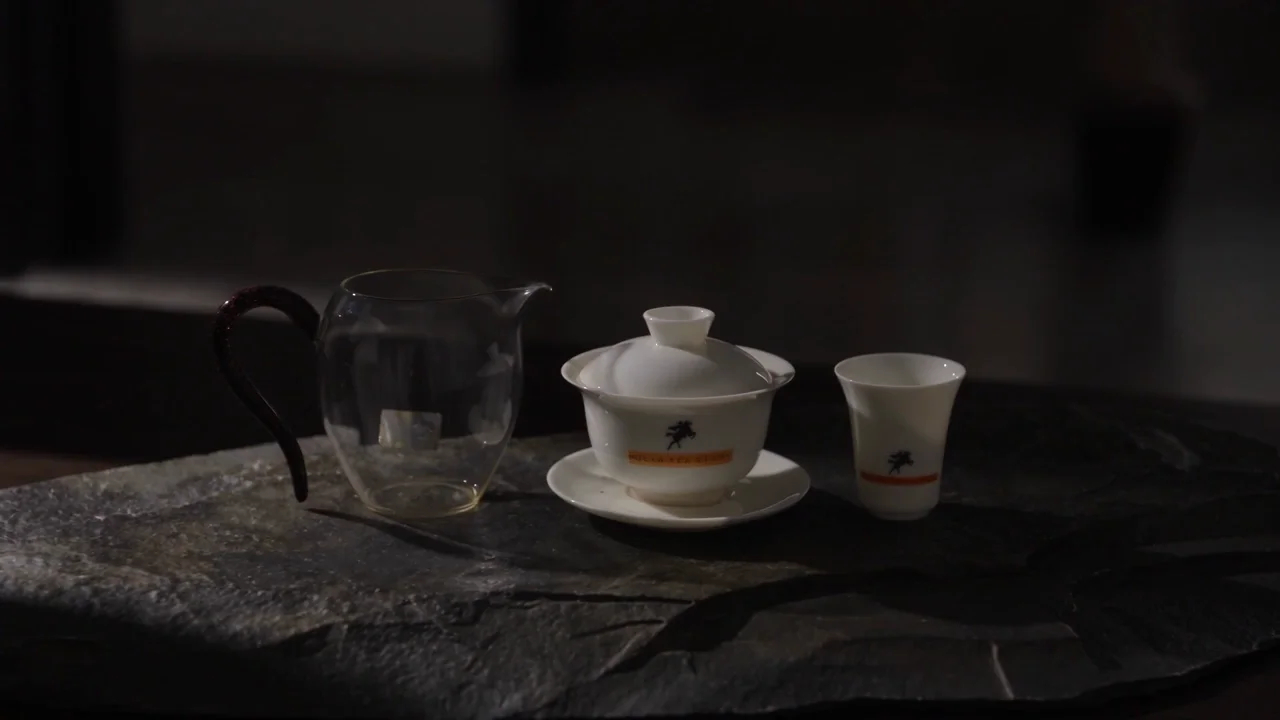
Brew yancha in a gaiwan or a zisha pot. Eight grams of dry leaf into a 110 ml gaiwan; water at a full 100 degrees Celsius; quick in, quick out. The first steep runs about five seconds — pour, then smell the aroma before tasting. The second steep stretches to seven seconds, the third to ten, and each steep after that climbs a little further.
The first liquor is usually saved for the very end — the "soul-returning liquor". It is the strongest of the session, held back to close the tasting. It is a small ritual: keep the best for last, and let the palate finish in the strength of the afterglow.
- Dosing8 g of dry leaf into a 110 ml gaiwan, or a 150 ml zisha pot.
- Water100 °C at a rolling boil; quick in and quick out.
- Soul-returning liquorThe first liquor, saved for the last sip — the close of the tasting.
5. How plots change the tasting
One cultivar, planted on different plots, gives entirely different body-feel in the cup. Take Rougui: grown on the rock tops, it tends to be bold, assertive, strong in stimulus; grown in the ravines, quiet in its far-reaching aroma, soft and lingering in flavour.
To taste yancha is, in the end, to taste the plot. The stimulus of rock-top tea comes from high polyphenols under strong light and wide temperature swings; the softness of ravine tea comes from high amino acids under short light and heavy humidity. What you taste is not a cultivar — it is the translation of climate, soil and altitude.
The method covered — the next chapter takes up storage: how time adds value to yancha.
TO TASTE · One cup from the same source
Private tea session · tasting by appointment
Yancha tasting is learned at the tea table. Book a Mulan private tea session, and drink rock rhyme until it is clear.
Book a private tea session ↗THE WHITE PAPER OF ROCK TEA
The Rock Tea White Paper · Contents
Twelve chapters and an epilogue, taking yancha apart — plots, cultivars, craft and rock rhyme.