

The Aged Tea White Paper · Testimony of Time / Chapter 5 · CH.05
The Science of Growing Finer with Age
Growing finer with age is not mysticism — it is the slow work of microorganisms and enzymes. Aspergillus niger, yeasts, theabrownins — Chapter 5 of the Aged Tea White Paper explains, with science, the road of Pu-erh's post-fermentation.
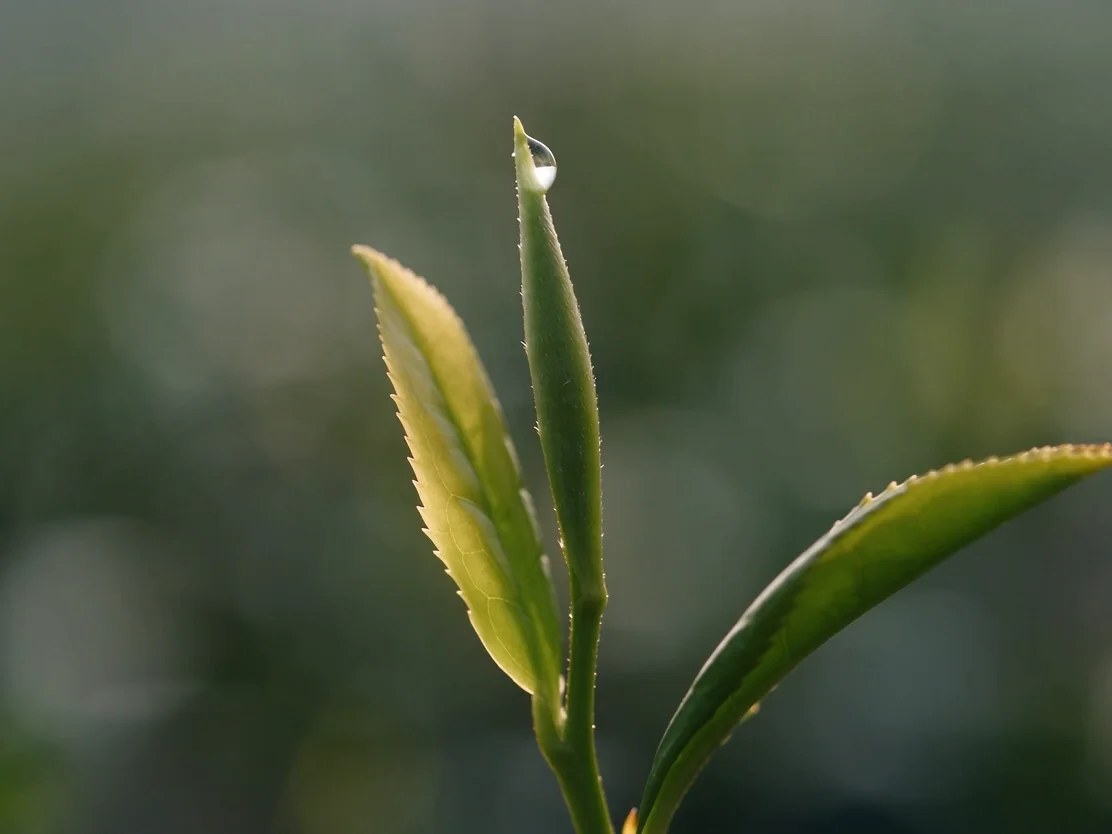
"Grows finer with age" is not a slogan. It is the labor of microorganisms inside a tea cake, sustained over decades. The aging of a raw Pu-erh is, in essence, a fermentation slowed to the pace of years.
1. The Life Left in the Craft
Everything begins with sun drying.
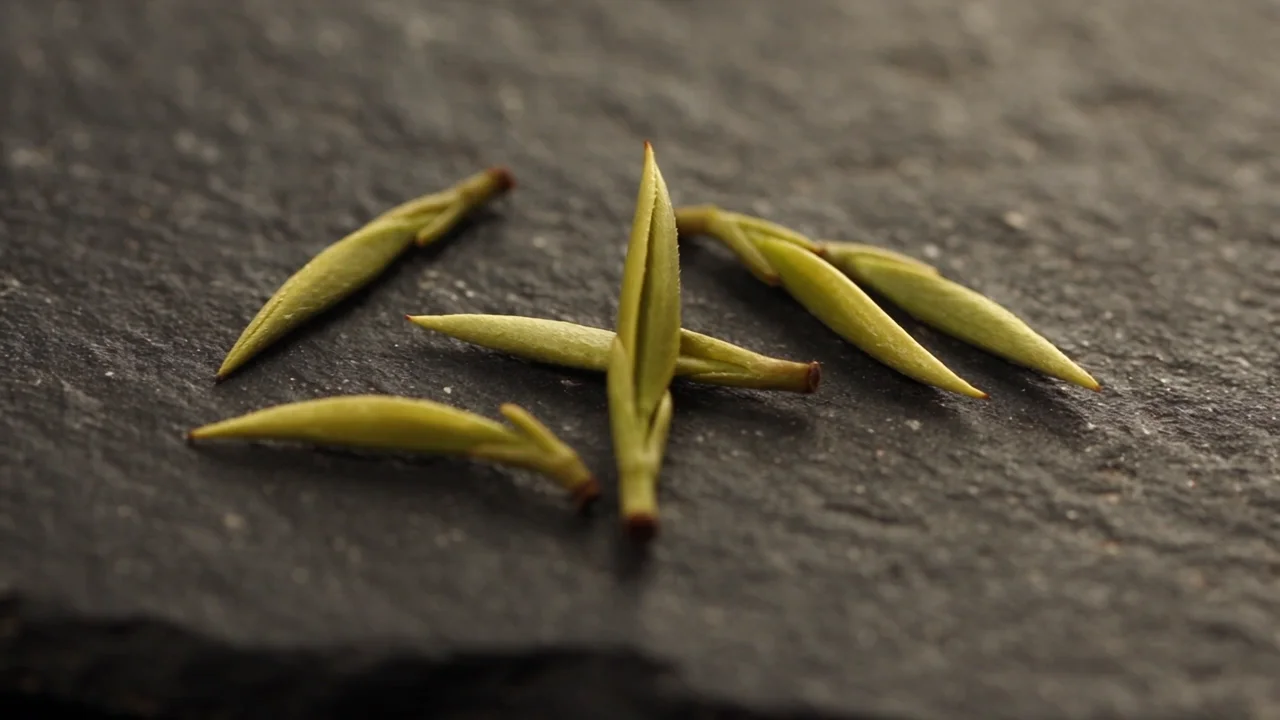
After kill-green, the fresh leaf of Yunnan's large-leaf varietal is not oven-dried. It is spread out to dry in the highland sun. The temperature of daylight cannot deactivate the enzymes the way pan-firing does, nor can it kill every microorganism on the leaf surface — enzyme and microbe both stay alive, and are pressed into the cake together.
This "not quite finished killing" is the divide between sun drying and pan firing, and the fork in fate between Pu-erh and green tea. Green tea's kill-green aims at total deactivation, nailing the tea to its freshest instant. Sun drying deliberately leaves a door open, so that after the tea leaves the works, it can keep changing.
So a raw Pu-erh's release from the factory is not an end point. It is a start. The day the cake enters the warehouse, the fermentation is only beginning.
2. A Relay of Microorganisms
Pu-erh's post-fermentation is not the fermentation of black tea. Black tea's is enzyme-driven oxidation — catalyzed by the leaf's own enzymes, finished in hours. Pu-erh's is led by microorganisms — a cooperation of bacterial and enzyme systems, finished over decades. Its mechanism is closer to the cellar aging of cheese and wine.
The main fungal groups researchers have identified in aging Pu-erh form the lineup of this relay:
- Aspergillus niger The lead strain. It carries tannase, breaking tannins down into gallic acid — the direct hand behind an old tea's deepening red liquor and its receding astringency.
- Yeasts They secrete extracellular enzymes that drive the oxidative condensation of tea polyphenols and the degradation of proteins — contributing body and sweetness.
- Penicillium and Rhizopus They take part in breaking down sugars and fiber, enriching the layers of the liquor.
- Aspergillus glaucus Found in some aged teas — a constituent of the diversity of the aging flora.
They do not arrive all at once; they hand over in relays. Different flora take the stage in different windows of temperature and humidity, each doing its stretch before passing the baton. A thirty-year-old cake is the work of several generations of microorganisms, one succeeding another.
The sip of old tea you drink
was aged for you first, by generations of microorganisms.
3. The Chemistry in the Cup
The labor of the microorganisms lands in the cup as a set of changes an instrument can measure.
Total tea polyphenols fall through oxidative condensation — this is why aged tea no longer bites. Theaflavins and thearubigins gradually decrease as they oxidize and polymerize into the larger-molecule theabrownins — this is why the liquor moves from gold to deep red, and then to a clear, luminous crimson. At the same time, the microorganisms degrade the coarser polysaccharides and proteins into soluble sugars and amino acids — the source of an old tea's sweet mellowness.
- Tea polyphenols Total amount falls; bitterness, astringency and bite recede with it.
- Theaflavins, thearubigins Gradually decrease through oxidation and polymerization.
- Theabrownins Increase; the liquor turns deep, red and bright.
- Gallic acid A product of tannin breakdown that accumulates; flavor turns mellow, liquor turns smooth.
The chemistry explains the "grows older" half of the phrase: matter is continuously reorganizing. The "finer" half — the aged aroma, the medicinal note, the camphor, the ginseng — comes from an even more complex reorganization of volatile compounds, and remains a living question in tea chemistry.
4. Naming the Concept
"Grows finer with age" was set out as a complete aesthetic position in 1995. That year, Deng Shihai's book Pu-erh Tea was published, establishing for the first time that aging-in-value was what set Pu-erh apart from every other class of tea, and laying out the full path: taste the old teas, drink the ripe teas, store the new teas. Deng Shihai has been called "Pu-erh's first man" for it.
Those phrases remade the whole trade. "Taste the old teas" gave aged tea its rightful place at the table. "Drink the ripe teas" gave those who could not wait for the years a choice for today. "Store the new teas" turned every ordinary tea drinker into a participant in time — the new tea you store today is the aged tea of twenty years from now.
Once a concept has its name, an industry has its direction. For the three decades since, the rises and falls of Pu-erh have circled those words.
5. The Limits of Science
Science can explain the transformation. It cannot explain all of it.
It can tell you how much theabrownin has increased, but it cannot decide for you whether this cup's aged aroma sets your heart at ease. It can analyze the makeup of the flora, but it cannot promise that every warehouse will raise good tea — because the microbial relay is exquisitely sensitive to its environment. A few degrees warmer, a few points more humid, and the relay team changes its lineup, and the result is entirely different.
This is why storage became a discipline of its own. In the next chapter: dry storage and wet storage — how one cake becomes two teas, in Kunming and in Hong Kong.
TO TASTE · A cup from the same source
Jingmai Big-Tree · 3 Years Aged
Picked in spring 2022; orchid fragrance is its soul. The life kept by sun drying is transforming slowly in time — grows finer with age, and you can taste it.
See this tea ↗THE WHITE PAPER OF AGED TEA
The Aged Tea White Paper · Chapters
Twelve chapters and an epilogue, taking aged tea apart — where it comes from, how it transforms, what it is worth, how the true is told from the false.