
The Aged Tea White Paper · Testimony of Time / Chapter 8 · CH.08
Aged Oolong
Tieguanyin must be stored five years to be called Lao Tie; every rock tea house boasts its year-crossed aged stock. Roasting gives oolong a second life. Chapter 8 of the Aged Tea White Paper: the craft of aged oolong.
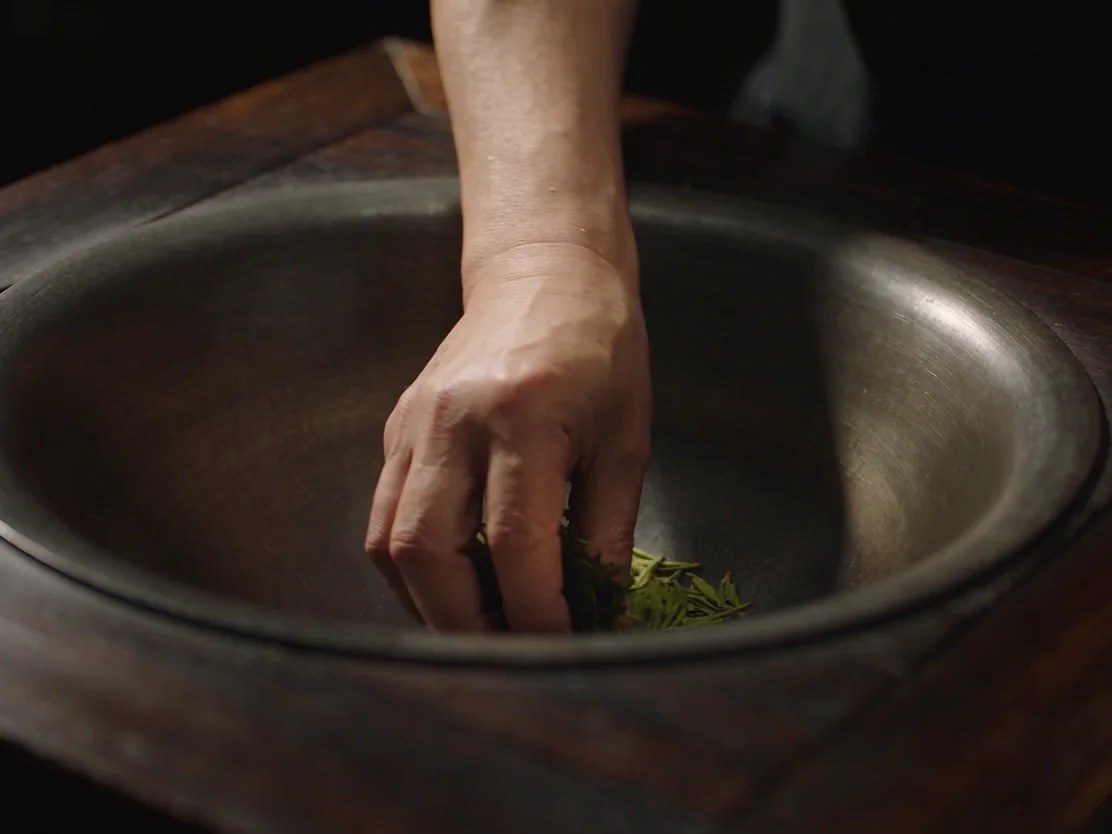
The aging of oolong is a second handshake between fire and time. Roasting is not the end; it is the ground on which a tea can begin again inside the years.
1. Tieguanyin's Lao Tie
In Anxi, aged Tieguanyin carries a more familiar name — Lao Tie, "old iron".
Lao Tie is not a new concept. It is an old habit. In earlier years Tieguanyin relied on roasting to lift its aroma; a tea well fired kept well, and the farmers stored what they had not sold in the year, taking it out a few years later for a re-roast and a re-sale. Stored long enough, some found the tea had not spoiled at all — it was mellower, smoother, fuller than the new. So the name Lao Tie spread from tea table to tea table.
On April 26, 2016, Amendment No. 1 to the national standard GB/T 30357.2-2013, "Oolong tea — Part 2: Tieguanyin", came into force, formally adding the aged-aroma type of Tieguanyin. It was the first time "aged tea" entered the clauses of a national standard: made from raw Tieguanyin tea and stored five years or more before it may be called aged-aroma. The GB/T 19598 "Product of geographical indication — Anxi Tieguanyin" published in 2025 refined the craft indices further — full baking at 70 to 140 degrees Celsius, moisture below 6%, storage of five years and above; color dark brown and lustrous, aged aroma evident, liquor deep red or orange-red.
- National standard GB/T 30357.2-2013, Amendment No. 1, in force April 26, 2016 — adding the aged-aroma type of Tieguanyin, stored five years or more.
- GI standard GB/T 19598-2025: full baking at 70–140°C, moisture below 6%, storage of 5 years and above; dark brown lustrous color, evident aged aroma, liquor deep red or orange-red.
- In the trade The Anxi market's common name for aged Tieguanyin is "Lao Tie"; a "Lao Tie Culture Hall" has been built there.
The meaning of the national standard: it moved Lao Tie from trade nickname to legal category — the first time aged oolong held a name with standing.
2. Rock Tea's Year-Crossed Age
Wuyi rock tea's esteem for age is old as the trade itself.
In the early Qing, Zhou Lianggong wrote in Songs of Fujian Tea: "Stored till deep red, worth three times the price; every house boasts its year-crossed aged stock." "Stored till deep red" means a tea fired fully, kept until the liquor turns deep red; "three times the price" means rock tea crossed over a year outsells the new several times over. Three hundred years ago, the Wuyi mountains were already in the aged-tea business.
That rock tea can age is again the work of fire. Its roasting runs three fires: the first roast, the re-roast, the slow simmer. The fire drives moisture to the lowest point, bakes the aroma into the leaf, and bakes the tea's structure into stability. Such a tea, sealed in a jar and opened the following year, has lost its fire temper; the floral has sunk; the rock rhyme stands out all the more. Stored longer still, wood and medicinal notes come forward, and the liquor moves from sharp to mellow.
- Songs of Fujian Tea Zhou Lianggong, early Qing: "Stored till deep red, worth three times the price; every house boasts its year-crossed aged stock" — the earliest written record of rock tea's esteem for age.
- The craft basis Three fires of roasting, moisture driven to the lowest point, structure stable — built for long keeping.
- Modern witness The White Paper on the Quality Chemistry and Health Functions of Wuyi Rock Tea (Wuyishan City, 2022) notes that rock tea stored longer tastes mellower.
"Year-crossed aged" is not a marketing concept for rock tea. It is its drinking tradition. New rock tea is drunk for its fire; aged rock tea for its rhyme — a memory of taste handed down among the tea people of Wuyi, generation to generation.
Roasting gives oolong a second life.
Time gives it a second breath.
3. The Aging of Dan Cong
The aging of Phoenix Dan Cong is the underestimated branch of the oolong family.
Dan Cong is divided by aroma type: Milanxiang, Yashi Xiang, Song Zhong, Baxian — each scent its own taste. The flavor-type cultivars — Milanxiang among them — richest in inner substance and fully fired, are the ones that keep best. Aged, Dan Cong's aroma turns from lifted to settled, its honey to fruit, then to dried fruit and aged aroma; the liquor turns from clear-cool to dense and thick.
A study of Lingtou Dan Cong gives one coordinate: sensory scores peaked at fifteen years of storage; at twenty years an aged note verging on astringent appeared. This says that Dan Cong's aging has an optimal window — not simply the older the better, but a summit reached where aroma and liquor balance.
- Cultivars that keep Flavor types such as Milanxiang — rich in inner substance, fully fired; aged, they turn to fruit, aged aroma and dried fruit.
- The data Lingtou Dan Cong scored highest at 15 years of storage; at 20 years an aged note verging on astringent appeared (Fujian Journal of Agricultural Sciences, 2017).
Dan Cong's aging is a reminder: oolong does not age without conditions. Cultivar, fire, storage — all three, or none.
4. The Art of the Re-Roast
The greatest difference between aged oolong and aged Pu-erh is that oolong needs the re-roast.
Pu-erh's aging is led by microorganisms; oolong's is led by firework. Tieguanyin, rock tea and Dan Cong, over long storage, draw moisture as the air's humidity shifts. Once dampness enters, the aroma scatters, and mold becomes a risk. So aged oolong is re-roasted every year or two — the dampness roasted out, the aroma roasted back, the tea's character roasted into stability again.
A re-roast is not simple heating. It is making the tea again. How hot, how long, how long to cool — all in the master's hands. Fire too light leaves dampness behind; fire too heavy damages the aroma. A good re-roast lets the old tea "wake" — it does not "bake it past".
- The cycle Aged oolong needs a re-roast every one to two years, against damp and decline.
- Fire control Full baking at 70–140°C, adjusted to the tea's character and its storage.
- The purpose To drive out damp, fix the aroma, steady the structure — not to change the tea's nature.
The re-roast makes aged oolong more laborious to keep than Pu-erh — and it is exactly this care that makes Lao Tie and aged rock tea the more precious.
5. The Afterwarmth of Fire
The aging of oolong is, in essence, a continuation of fire. Roasting does not finish a tea; it steadies one — steady enough to be put into time, steady enough to be woken by fire again years later.
This is a different road from Pu-erh's, but it arrives at the same core of aged tea: time is not the enemy; it is the partner. Oolong's partner is fire; Pu-erh's is the microbe. Both prove the same thing: a good tea can wait.
TO TASTE · A cup from the same source
Century-Old Lao Cong Shui Xian · Vintage Batch Tong
Every batch of a single year, gathered into the same tong. Rock tea's age is a conspiracy of fire and time.
See the vintage batches ↗THE WHITE PAPER OF AGED TEA
The Aged Tea White Paper · Chapters
Twelve chapters and an epilogue, taking aged tea apart — where it comes from, how it transforms, what it is worth, how the true is told from the false.