

The Aged Tea White Paper · Testimony of Time / Chapter 7 · CH.07
Aged White Tea
One year a tea, three years a medicine, seven years a treasure. Aged white tea is white tea's slow walk through time — from pekoe aroma to jujube and medicinal notes, a liquor like amber. Chapter 7 of the Aged Tea White Paper: the aging road of Fuding white tea.
One year a tea, three years a medicine, seven years a treasure. In Fuding, nine words sum up one of the oldest arts of keeping tea.
1. Where the Nine Words Come From
In the tea-farming households of Fuding, nearly everyone has heard the nine words: one year a tea, three years a medicine, seven years a treasure.
They are not an advertising line; they are the distillation of folk experience. The Fuding municipal government's own introduction of 2024 uses them to sum up how aged white tea transforms: in the first year, the tea is fresh in character; stored to three years, a medicine-like mellowness begins to appear; past seven years it is regarded as a "treasure", its aroma and liquor both remade.
The saying has traveled in Fuding for centuries because it is accurate. White tea has the simplest craft of any tea — no pan-firing, no rolling, only withering and drying. This near-inaction of craft preserves almost all of the fresh leaf's living material. Nothing is deactivated by heat, nothing destroyed by rolling; it all lies sealed in the dried leaf, waiting for someone who understands it to wake it.
The national standard for white tea (GB/T 22291-2017), issued November 1, 2017 and in force from May 1, 2018, states in its storage clause that the product may be kept long term. This was the first time a national standard gave white tea's capacity to age its proper name — confirming in regulation that white tea is not a tea to drink up quickly, but a tea that can be kept.
2. The Source of the Medicinal Note
White tea's value in age can be traced at least to the end of the Ming and the start of the Qing.
Zhou Lianggong, in his Notes from Fujian (Min Xiao Ji), recorded one line: white tea "works like rhinoceros horn; it is the sovereign medicine for measles". The line has been quoted ever since, because it is the earliest written record to place white tea's drinking value and its medicinal character side by side. Zhou Lianggong was a Fujian official in the early Qing; what he wrote was not hearsay but the drinking custom he saw with his own eyes.
From the late Qing on, Tongrentang of Beijing bought about 50 jin of aged white tea each year as a base ingredient in its medicines — the archive itself is lost, but the account passed mouth to mouth among the tea people of Fuding. Nor is it an isolated case: within Chinese medicine, aged white tea has long been held a harmonizing thing, "cooling but not cold, warming but not drying", fit for long keeping.
- Notes from Fujian By Zhou Lianggong, late Ming to early Qing, recording that white tea "works like rhinoceros horn; it is the sovereign medicine for measles".
- Tongrentang From the late Qing, buying about 50 jin of aged white tea a year as a base for medicines (passed down among tea people; no original archive survives).
- Modern research Academician Liu Zhonghua's team began studies of white tea's functional components in 2011 — a modern research perspective on white tea's aging and keeping value.
Note: this section is a historical and cultural account, offered for the study of tea culture only; it makes no modern health claims.
From sovereign medicine for measles to studies of aging, from medicine base to research subject — the "medicinal" character of aged white tea has never left the lived experience of the Chinese. It rests not on concepts, but on time.
White tea's craft is the simplest of all —
so its transformation is the most honest.
3. What Seven Years Transforms
Put white tea into time, and three things change: aroma, liquor, character.
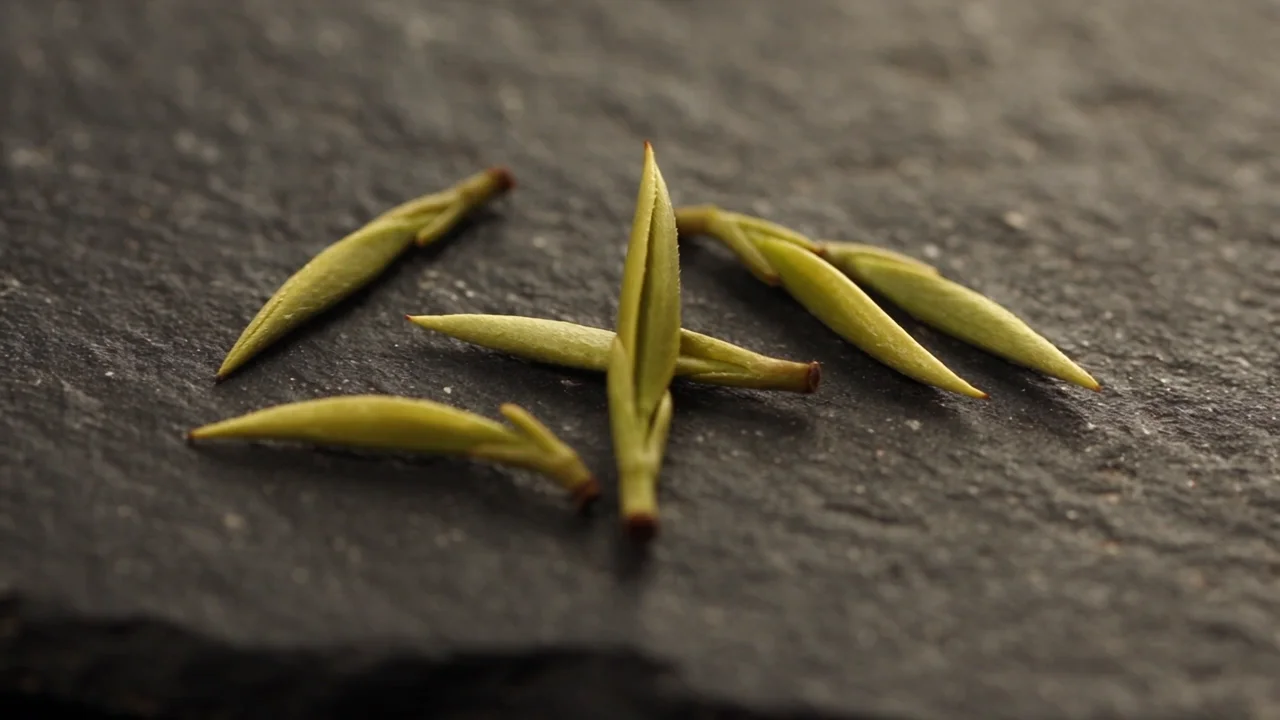
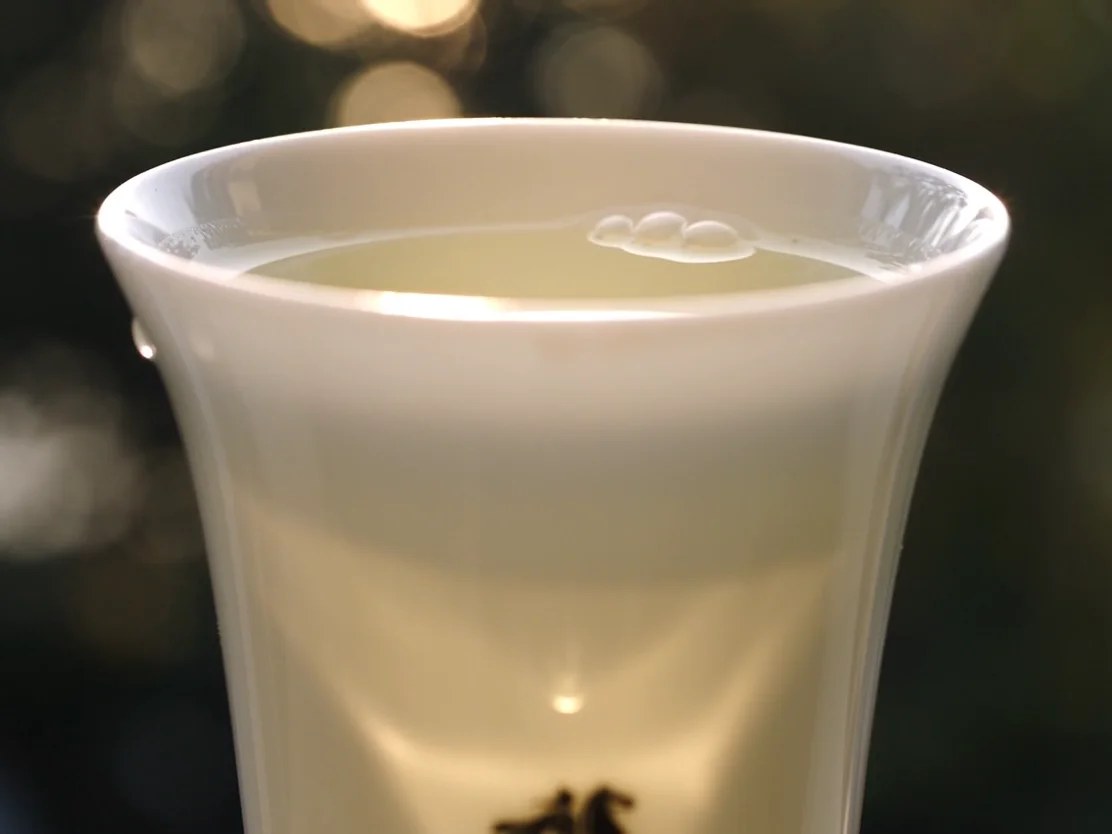
New white tea's aroma is pekoe aroma. Silver Needle, covered in white down, smells like hay in sunlight with a touch of honey. Stored three years, the pekoe recedes and a jujube note floats up — the preserved-fruit breath of sugars in the coarser leaf and stem released through aging. A few years more, the jujube sinks and the medicinal note rises. The liquor changes most visibly of all: from pale apricot-yellow to orange-yellow, and past seven years a liquor like amber — translucent, deep red.
- Pekoe aroma The new-tea stage: Silver Needle covered in white down, hay and honey interwoven, clear and sweet.
- Jujube aroma After about three years, sugars in the coarser leaf and stem of Shoumei release — a jujube or faint medicinal note appears.
- Medicinal aroma Five to seven years: aged aroma, jujube and medicine interwoven, the liquor like amber.
- Character shifts The tea's nature moves from cool to warm — from "clearing heat" to "nourishing".
"One year a tea, three years a medicine, seven years a treasure" describes exactly this path from clear-cool to warm-mellow. It is not mysticism; it is the taste-expression of matter reorganizing inside the leaf.
4. Silver Needle and Shoumei, Two Roads
Within aged white tea, Silver Needle and Shoumei walk two entirely different roads.
White Hair Silver Needle is all bud, covered in down. Aged, its defining trait is "pekoe aroma with honey rhyme" — the aroma turns from clear-cool to clear-sweet, the liquor from light to dense and silky. It is the "elegant" line of aged white tea, for sitting alone and drinking slowly.
Shoumei is leaf and stem — coarse, stalky, rich in sugars. Its aging path is more direct: the jujube comes early, the medicinal note comes strong, the liquor is thick and it holds through many infusions. A Shoumei past ten years shows its strength better boiled than steeped. It is the "substantial" line of aged white tea, for drinking together around the stove.
White Peony stands between the two: the floral recedes, the fruity emerges — the middle ground between elegant and substantial.
- White Hair Silver Needle Made of buds; pekoe aroma with honey rhyme; aged, it turns clear-cool to clear-sweet, the liquor dense and silky.
- White Peony One bud to one or two leaves; floral receding, fruity emerging — between elegant and substantial.
- Shoumei Coarse leaf and stem, rich in sugars; aged, strong jujube and medicinal notes, thick liquor, endures infusions — best boiled.
5. The Common Sense of Keeping White Tea
Keeping white tea takes no high technology. It takes three conditions: dry, dark, sealed.
The folk method of Fuding is three-layer packing: a food-grade foil bag sealed inside, a plastic bag against moisture in the middle, a cardboard box against light outside. Off the floor, off the wall, never beside anything with a smell. In the south, run the air conditioner for dehumidifying through the damp season; in the north, guard against over-drying in heated rooms. The rules are not complicated. What is hard is executing them the same way, every year, for ten years.
The reward of keeping white tea is here: you need not be a tea merchant, need no professional warehouse. With one dry cabinet you can take part in a transformation measured in units of seven years. Every year you open the box and the aroma inside has moved — a participation no ready-to-drink product can give.
TO TASTE · A cup from the same source
The Mulan Archive
Year, batch, number, provenance and keeping — so that every batch of tea can be retold by time.
Visit the Mulan Archive ↗THE WHITE PAPER OF AGED TEA
The Aged Tea White Paper · Chapters
Twelve chapters and an epilogue, taking aged tea apart — where it comes from, how it transforms, what it is worth, how the true is told from the false.