

The Aged Tea White Paper · Testimony of Time / Chapter 2 · CH.02
A Brief History of Aged Tea
The history of aged tea begins with the mule caravans of the Tea Horse Road. Pu tea steamed into cakes, the tribute ledgers of the Yongzheng reign, the merchant houses of the Six Great Tea Mountains — Chapter 2 of the Aged Tea White Paper returns to where aged tea set out.
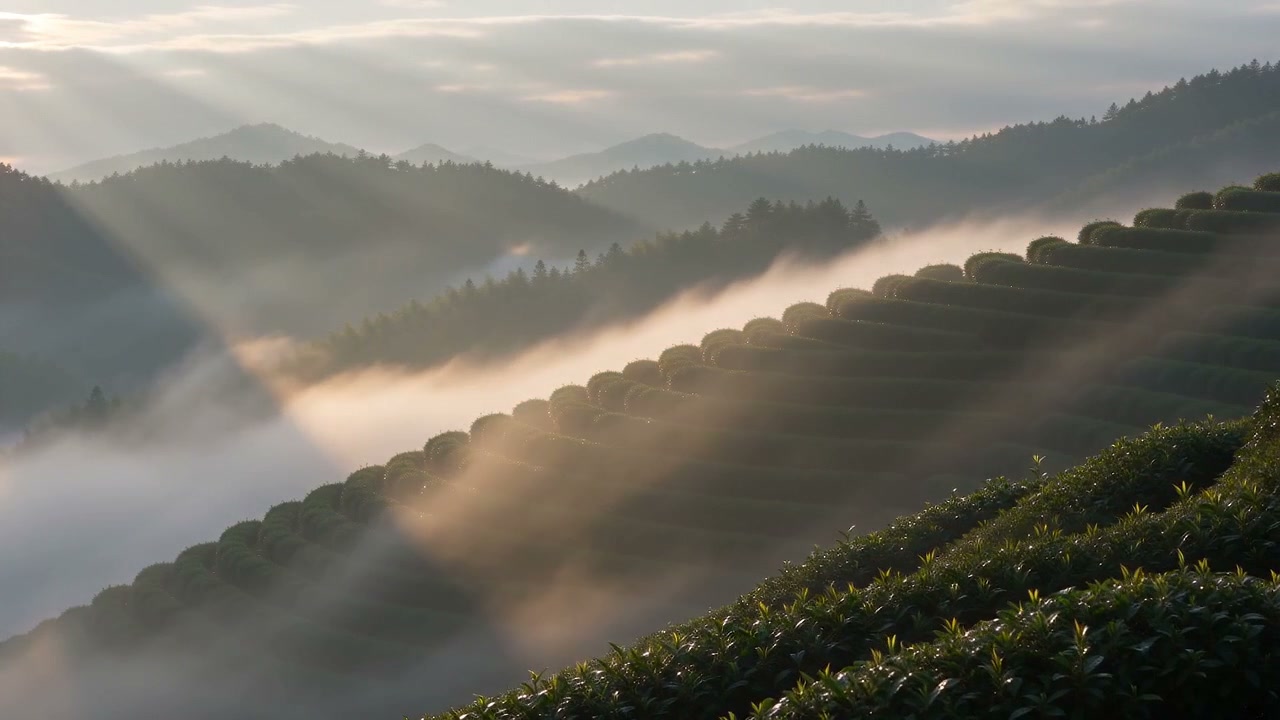
Aged tea was not invented. It was forced into being by the road. Only when a destination took months to reach did a tea exist that could survive the journey.
1. The Caravans of the Tea Horse Road
The history of aged tea must begin with a road stamped out by hooves.
The trade of tea for horses began in the Tang dynasty. Tea from Yunnan and Sichuan moved north and west, returning with the horses Tibet urgently needed. By the Song dynasty the trade was written into state institutions — the court established the Tea and Horse Commission, trading tea for horses and governing the frontier with tea. Under the Ming and Qing the tea-horse trade reached its height, and the caravan routes over the plateaus and gorges were trodden firm. The name "Tea Horse Road" is a modern scholar's coinage; the web of paths it points to had been running through the mountains of the southwest for over a thousand years.
The first demand this road made of tea was not flavor. It was endurance. From the tea mountains of Yunnan to Lhasa, a caravan walked for months, crossing snow ranges and rainy seasons. Loose tea could take neither rain nor pressure, so the leaf was steamed soft, pressed tight, formed into cakes and discs — smaller in bulk, sealed against the rain, doubling what one horse could carry.
Compression, from the very start, was a shape born for the long haul. And that very shape planted the seed of "aged tea" centuries later: tea pressed tight transforms slowly; tea that travels far arrives old.
2. Pu Tea, Steamed into Cakes
The name "Pu tea" appears in writing for the first time in the Wanli reign of the Ming. Xie Zhaozhe, in his Dian Lue (A Sketch of Yunnan), set down one line:
- Dian Lue In the Wanli reign of the Ming, Xie Zhaozhe recorded: "What officials and commoners alike drink is all Pu tea, steamed into cakes."
- The craft Steamed soft, pressed into cakes — the earliest clear record of compression, and the written starting point of the name "Pu tea".
- The context "Officials and commoners alike" says it was no tribute rarity, but a daily drink shared by state and household.
Four words — steamed into cakes — declare the basic form Pu-erh has kept for centuries. Behind the cake stands the road: without the demand of long-distance transport there would be no pressing craft; without the pressing craft there would be no later possibility of slow transformation, of growing finer with age.
3. The Tribute Ledgers
Pu-erh tea truly entered the center of the empire in the Yongzheng reign of the Qing.
In the fourth year of Yongzheng (circa 1726), Ortai carried out the replacement of native chieftains with appointed officials in Yunnan; the Pu-erh tea districts came under official administration, and Pu-erh entered the annual tribute. A proclamation of circa 1734, forbidding the forced purchase of official tea, preserved the details of how tribute tea was procured — on what day the mountains opened for picking, which office inspected and received; the ledgers remain. In the Daoguang reign, Ruan Fu wrote his Record of Pu-erh Tea in still finer detail: the tea mountains, the tea households, the picking seasons, the shape of the cakes, and named items such as "Nüer tea", all entered in the register.
From Pu'er to Beijing: thousands of miles, months on the road. The tribute tea set out as new tea and arrived at the palace already aged. The Pu-erh drunk inside the palace was never the taste of that year — it was the taste of the road. This was perhaps the first time the Chinese drank, on any scale, "tea processed by time", though no one yet called it that.
Aging was first discovered by the road.
Only later was it pursued by the heart.
4. The Six Great Tea Mountains
The Dianhai Yuheng Zhi, written at the end of the Qianlong reign, recorded the complete map of the Pu-erh producing region: Youle, Gedeng, Yibang, Mangzhi, Manzhuan, Mansa — the Six Great Tea Mountains of history. The Record of Pu-erh Tea of the Daoguang reign added Yiwu and other mountains, and the tea houses began to write their own names behind the names of the mountains.
That was Pu-erh's first golden age. Numbers on the mountains, caravans on the roads, fixed markets in Tibet, overseas sales in Nanyang. Once out of the mountains the tea divided: one road north to the capital and Tibet, one road south out of Yunnan into Burma, on to Hong Kong and the sea. Every road was long, and every batch grew old on the way.
- Dianhai Yuheng Zhi By Tan Cui, completed circa 1799 — the first written record of the names of the Six Great Tea Mountains.
- Record of Pu-erh Tea By Ruan Fu, circa the Daoguang reign — a detailed account of tribute procurement and the names of the tea mountains.
- The trade routes North: to the capital, to Tibet. South: out of Yunnan into Burma, via Hong Kong to Nanyang. Overseas sale and frontier sale — the two traditional channels of Pu-erh export.
Tea shipped this far often arrived years after it was made. The lamas of the frontier, the miners of Nanyang, the teahouses of Hong Kong — what they drank was "aged Pu-erh". In time, people found this tea did not fear age, and was better for it. The idea of aged tea was confirmed at tables thousands of miles from Yunnan, then traveled back into its mountains.
5. From Passive to Deliberate
Look back at this history and aged tea arrives in two steps. The first was passive: the road was too long, and the tea aged whether anyone wished or not. The second was deliberate: people found that age improved it, and began to store tea without drinking it, waiting for age.
The second step was completed in the twentieth century — the restaurants of Hong Kong began to hoard tea, the tea factories of Yunnan began to study storage, and the four characters "grows finer with age" were formally written into the aesthetics of Pu-erh. That story belongs to later chapters. But the source of it all is this road: first the thousands of miles of the caravans; only then the decades in the cup.
So the history of aged tea is really a history of how the Chinese live with time — we do not only consume time; we cellar it.
TO TASTE · A cup from the same source
The Mulan Archive · Fifteen Groves
From Nannuoshan to Laobangyue, fifteen single-grove raw Pu-erh teas — elevation, tree age and batch, recorded item by item. The grove is where every story begins.
Visit the Mulan Archive ↗THE WHITE PAPER OF AGED TEA
The Aged Tea White Paper · Chapters
Twelve chapters and an epilogue, taking aged tea apart — where it comes from, how it transforms, what it is worth, how the true is told from the false.