
A person can travel very far.
To different cities, different views, different people.
But there is always a moment when we are willing to sit down.
There is water on the table. Tea. A cup.
The distance suddenly grows quiet.
This is how we understand objects.
An object is not decoration on a tea table.
It exists so that a cup of tea can happen better.
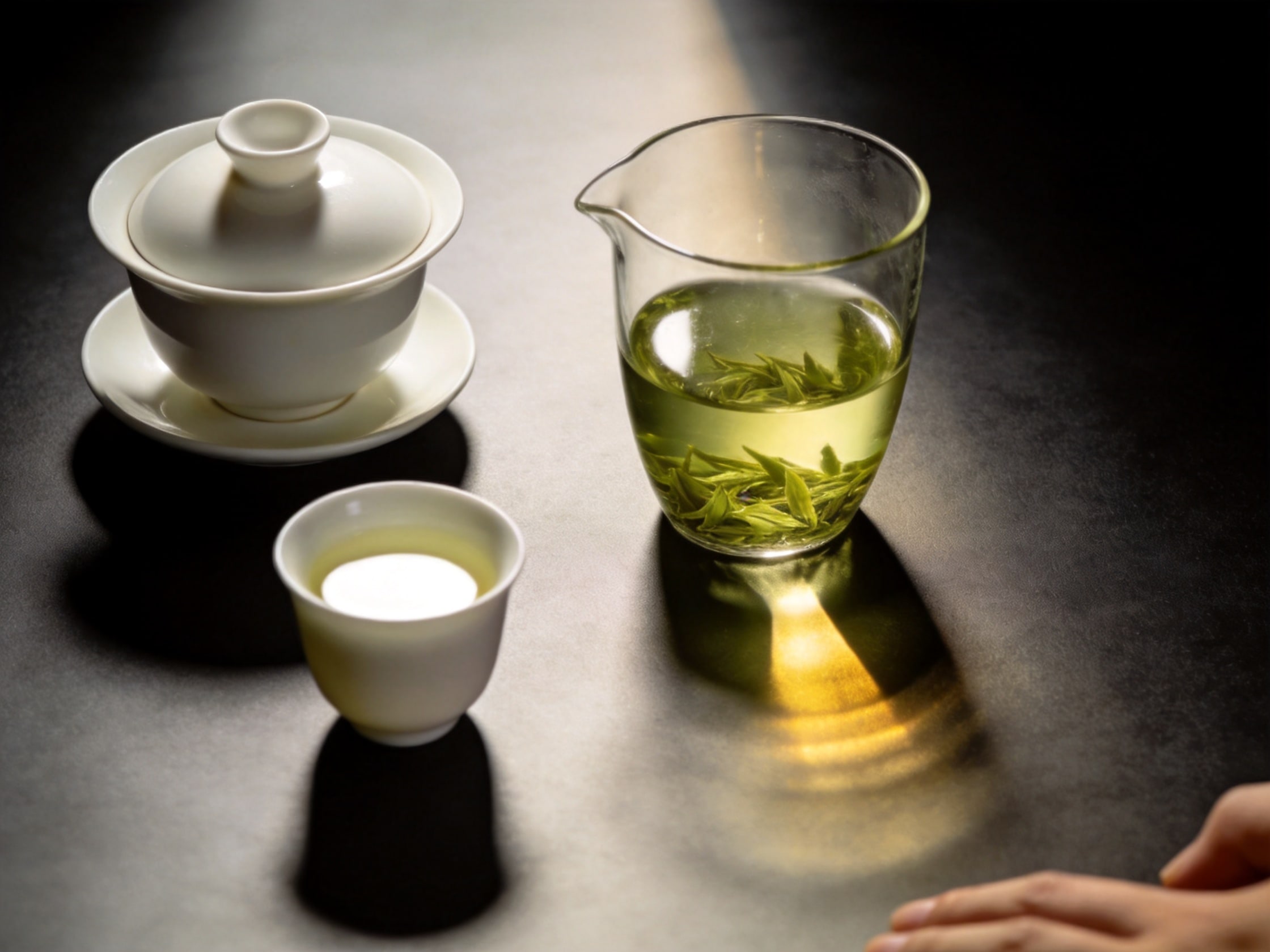
A white porcelain gaiwan.
We like its restraint.
White does not rush to express itself. The shape of the leaves, the colour of the liquor, the shifting light as it falls — all can be clearly seen.
A clear fairness pitcher.
Glass leaves the liquor unobscured. From the gaiwan to the cup, colour, temperature and movement all become part of the drinking.
A small tea cup.
In the end, a cup of tea arrives in the hand.
The object does its work, then steps back.
What matters is the tea, and the people seated at either end of the tea table.
We do not want to turn Eastern objects into nostalgic symbols.
They can be quiet, and they can be modern.
They can come from traditional ways of use and still belong to life today.
A good object does not need to tell you how to live.
It simply makes a moment more complete.
From the distance, to the tea table.
Objects give a cup of tea its shape, and give the return somewhere to rest.
Return is another kind of arrival.
MULAN OBJECTS
THE ART OF RETURN