
MULAN JOURNAL / 01 TEA CULTURE
One Brew of Shuixian, Three Years of Fire
Roasted rock tea cannot be drunk at once. The tea waits for the fire to fade; we wait for the tea to wake. The two years between are where rock tea truly tastes. A notebook on roasting and resting: why good rock tea cannot be hurried.
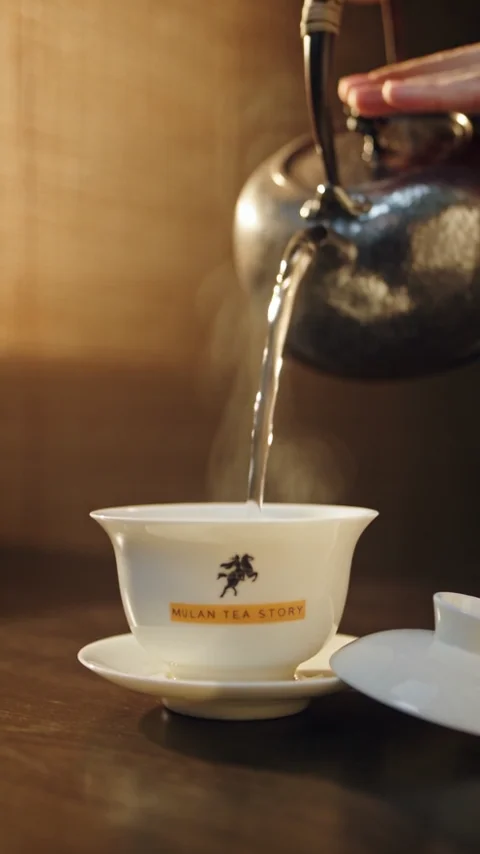
Fresh-roasted rock tea drinks dry. Not bitter, not astringent — a heat pushing up from the throat. What it needs is not awakening. It is time.
1. Roasting Is Not Drying
Many take roasting for a drying step. It is not. Drying ends after rolling. What roasting handles is everything in the leaf that is still raw.
Rock tea is usually roasted in three passes.
- First roast, the water-driving roast Higher heat forces out the moisture left after rolling. This pass decides whether the tea can be stored at all.
- Second roast The heat comes down and the time stretches. Sugars and amino acids meet the heat in a Maillard reaction; aroma turns from green to ripe, from floating to settled.
- Simmered fire, full fire Low heat, slow, twenty or thirty hours at a stretch. This pass is the watershed: simmered well, a tea is still climbing three years later; simmered past the point, it dies on the spot.
The temperature of the roasting room is read on the back of the hand. As the old line goes: sweat above the waist, not below — a room of people around the charcoal, and whoever's forehead dampens first, the fire is right.
2. Resting: Eighteen Months of Silence
Fresh off the fire, the heat is pressed inside the tea. Drink it now and the aroma is smothered, the liquor dry, the throat tight. Not a defect — the body has not finished its road.
- Light fire Rests about 1–3 months. Aroma high and lifted, made to drink in its year — but finish it soon.
- Medium fire Rests about 6–12 months. Aroma and liquor begin to balance; this is the daily tea of most drinkers.
- Full fire Rests 18 months to 3 years. This is the rock tea that gets remembered: liquor a clear orange-red, water on entry, bone in the throat.
So in rock tea, "new" is not a compliment. Quite the opposite: old hands buying spring tea ask one thing first — is there still last year's?
Fire is the means; resting is the point.
The tea waits for the fire to fade; we wait for the tea to wake.
3. Where the Old Grove's Cong Flavor Comes From
Shuixian is the one cultivar in rock tea that needs no explaining. It does not win on aroma — it wins on the thickness of the liquor, and on something called cong flavor.
- Age of the bush "Old grove" usually means thirty years or more, unmistakable past fifty. The older the tree, the deeper the roots, and the more different the minerals they draw.
- Three ways of saying it Wood, moss, brown rice. All three tend to show up at once, in different proportions.
- The plot Between two old-grove lots, the gap between zhengyan core rock and the half-rock belt is wider than between cultivars. Rock rhyme comes from soil weathered off Danxia conglomerate — no craft can make up for it.
Cong flavor is not strong. It hides in the middle stretch of the third and fourth infusions — the thing that suddenly gives the liquor weight. People meeting it for the first time often go quiet for a while, unable to find the right word.
4. How to Read a Shuixian's Age
Skip the packaging. Look at three things.
- Dry leaf A full-fire tea, fully rested, is dark umber with a light frost of bloom. Take a handful in your palm: the sound is crisp, not muffled.
- Liquor New tea leans yellow and bright; old tea deepens toward orange-red, oily, clinging to the cup. Nothing should float in it.
- After the seventh infusion The decisive step. New tea is gone by the fifth; a rested old tea still holds its middle at the seventh. A rock tea's foundation shows in the tail water.
For brewing, don't use water that is too soft. Hard water presses the aroma down; purified water leaves it thin. Best is a mineral water of moderate mineral content, TDS 50–120. Boiling water — 100°C, no discussion.
5. Few Things Are Worth the Wait — Tea Is One
Three years — not long, not short, however you say it. A case of full-fire Shuixian rests quietly in the warehouse, its flavor going a little deeper each year. No one can hurry this.
This may be tea's oldest value: it refuses to be consumed ahead of time.
TO TASTE · A cup from the same source
Luxiu Old-Grove Shuixian
Full fire, simmered all the way; rested more than two years. Liquor a clear orange-red — water on entry, bone in the throat. From the third infusion on, cong flavor rises through the middle of the liquor.
Visit the Shop ↗MULAN JOURNAL, written slowly
Volume One: 12 pieces, a letter every two weeks. Leave your email and the next piece comes straight to you.